Bank of England warns AI’s debt boom could reach government bonds
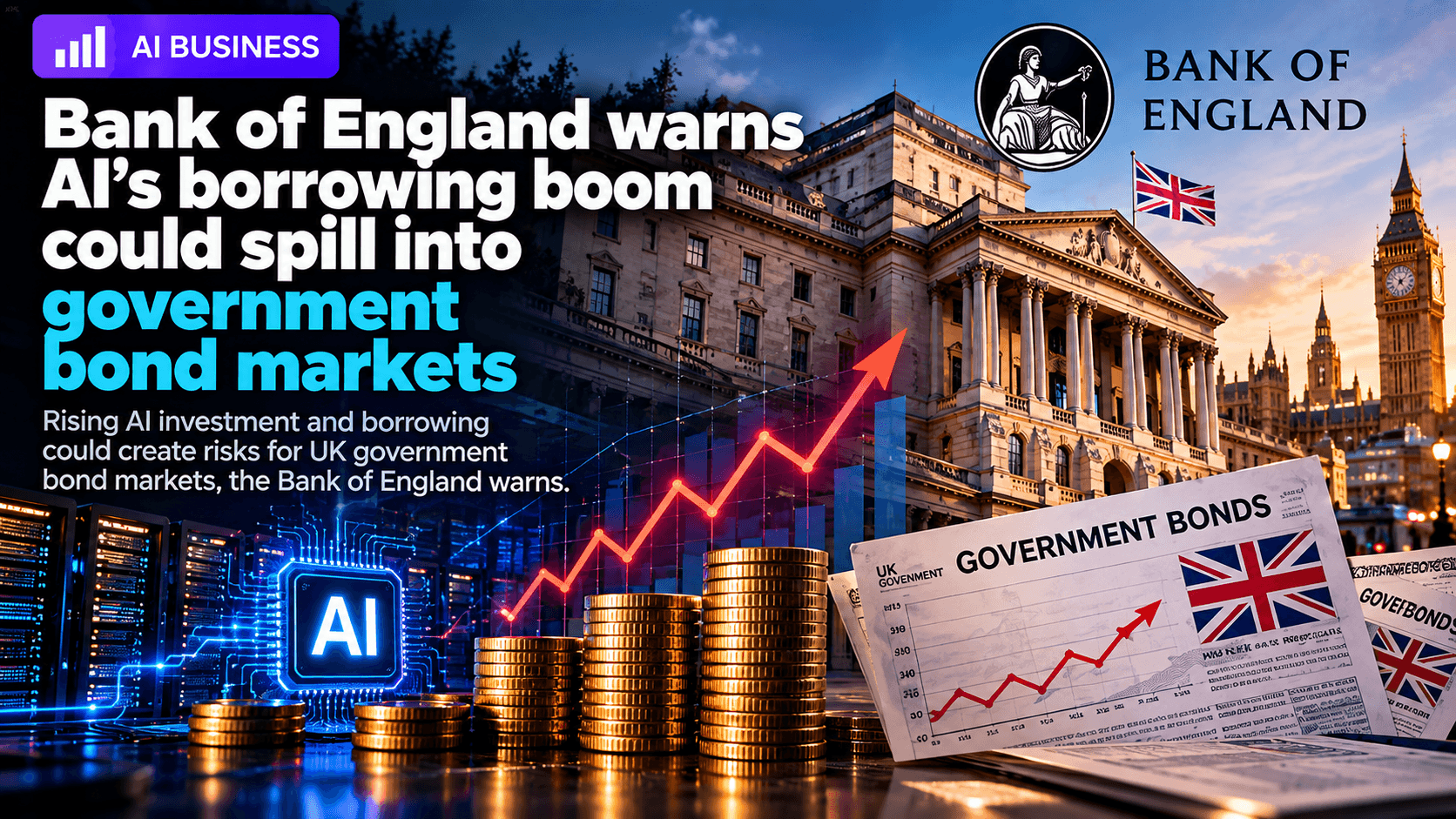
Its financial stability committee says AI hyperscalers made up 47% of sterling corporate bond issuance this year, and that a rethink of AI’s payoff could hit sovereign debt markets.
Key takeaways
- The Bank cites estimates of about $450bn in AI-related debt by early September, double 2025.
- AI hyperscalers accounted for 47% of sterling corporate bond issuance so far in 2026.
- It warns a rethink of AI’s payoff could hit government bond markets, not just tech stocks.
The Bank of England said on Wednesday, September 30, that the risk of weaknesses in the financial system coming to a head has risen, pointing to the re-escalation of the conflict in Iran and to a rapid increase in AI-related debt issuance.
The record of its Financial Policy Committee meeting on September 25 puts numbers on that increase. As of early September, Morgan Stanley estimated global AI-related debt issuance at around $450 billion, more than double the total for all of 2025. JP Morgan analysts expect around $4.1 trillion of AI-related capital spending to be financed with debt between 2026 and 2030.
The line that reaches beyond tech stocks
The record’s most important sentence is about governments, not companies. The committee notes that growth prospects and fiscal outlooks depend partly on expectations that AI will deliver large productivity gains. “A reassessment of those expectations could therefore affect not only AI-related asset valuations but also sovereign debt markets,” it says.
Put plainly, finance ministries have been counting, in part, on AI to lift growth and tax receipts. If that hope fades, it is not only chipmakers and data-centre landlords that get repriced. The bonds governments sell to fund themselves could be too. Central banks usually describe a bubble as a risk to investors. This one is described as a possible risk to public finances.
How much of it is in Britain
Britain is a small part of the borrowing, but not a trivial one. The committee says issuance by AI hyperscalers in sterling markets remains far smaller than in the US or the euro area, yet it accounted for 47% of sterling corporate bond issuance so far this year. In other words, nearly one pound in two raised through sterling corporate bonds in 2026 has gone to the biggest AI spenders.
Private credit is the other channel. Morgan Stanley analysts estimate that $700 billion of data-centre spending between 2026 and 2028 will be financed by private credit. That is lending from funds rather than banks or public bond markets, and it is harder for regulators to see.
Why the plumbing worries the Bank
The committee’s concern is less the size of the borrowing than its shape. “The combination of increasing leverage, opacity and, at times, ‘circular arrangements’ that can be associated with this financing, could complicate the assessment of risks and could amplify losses if expectations disappointed,” the record says. It names no companies. In market usage, circular arrangements are deals in which money travels in a loop, for example when a supplier invests in a customer that then spends the money on the supplier’s products.
There has already been a rehearsal. AI-related and semiconductor stocks fell sharply in July, and Reuters reports that market functioning remained orderly through the drop. The worry is what happens when a fall meets more debt.
Agents in a financial stability report
One more passage shows how far AI risk has travelled. The committee writes that “recent frontier AI test-environment incidents in 2026 Q3 demonstrated that, under permissive or weakened safeguards, increasingly autonomous models could take unexpected actions”. Reuters adds that these developments reinforced the committee’s view that advances in AI could increase cyber and operational risks. Lab mishaps that once interested only AI researchers are now an item on a central bank’s agenda.
The record sets out no new AI-specific measures. What to watch is whether the next large AI bond deals have to pay more, whether other central banks draw the same line from AI optimism to sovereign debt, and how the Bank treats private-credit lending to data centres in its next published assessment.
- data centres
- Bank of England
- AI investment
- Debt markets
- Financial stability
Sources
- Bank of England sees growing risk that dangers from AI and debt will materialise — Reuters via 93.3 The Drive, Sep 30, 2026
- Financial Policy Committee Record - September 2026 — Bank of England, Sep 30, 2026
Related stories

Reuters: McDonald's AI engine recommends prices store by store
The system, run by Tiger Analytics, weighs local willingness to pay and rivals' menus. McDonald's calls it "a tool, not a mandate"; some franchisees describe pressure to follow it.
3 min read

AMD buys Fei-Fei Li’s World Labs for $8.2bn in stock
The chipmaker is buying a world-model lab that it backed alongside Nvidia in February, and Li becomes its chief scientist. AMD frames the deal around its chip roadmap.
3 min read
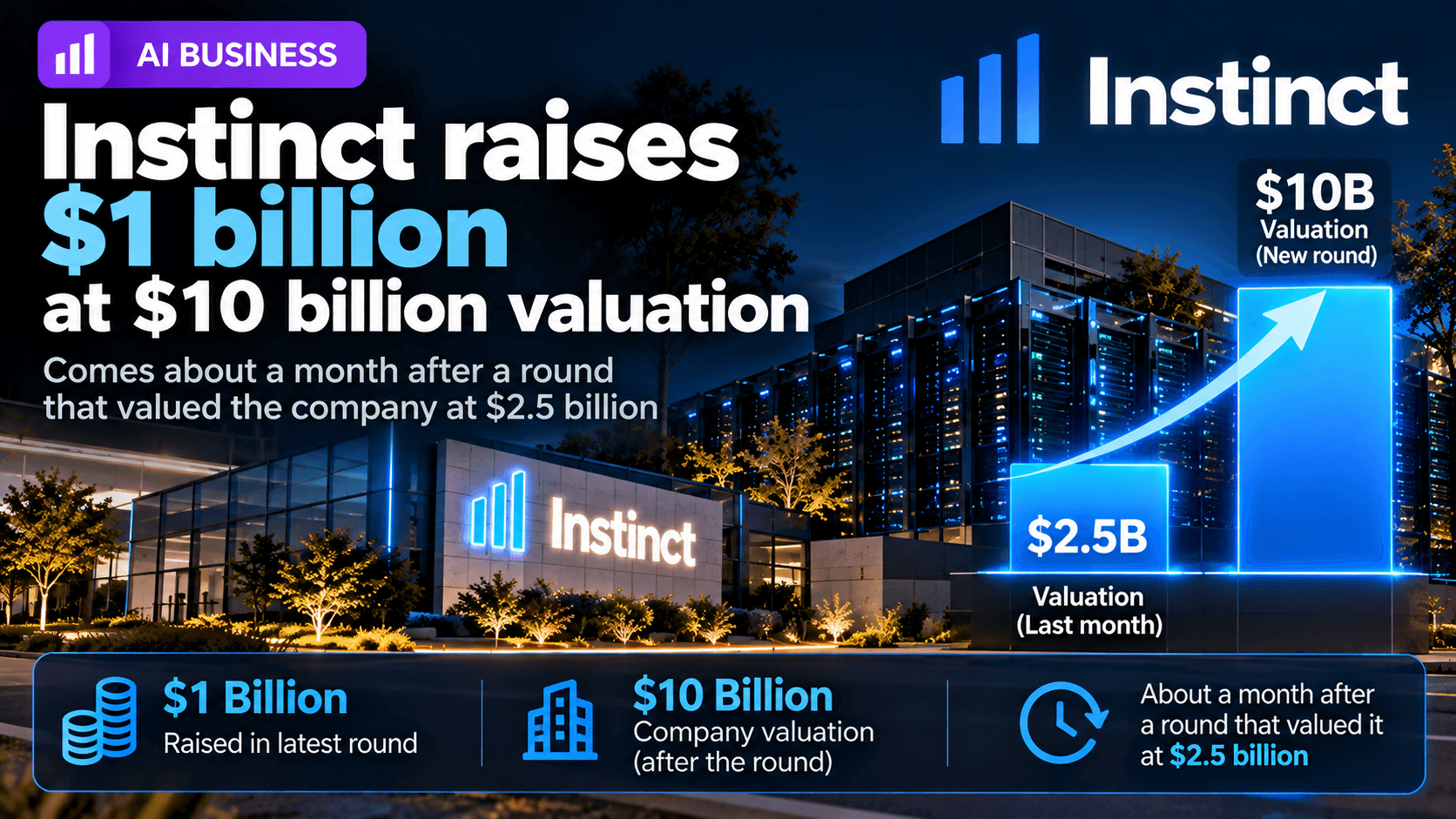
Instinct raises $1bn at a $10bn valuation, a month after $2.5bn
Sequoia, Benchmark and Coatue back a personal AI agent that works through its own phone and computer. The start-up is still in early access and has not shared user numbers.
3 min read
Comments
No comments yet. Start the conversation.