Instinct raises $1bn at a $10bn valuation, a month after $2.5bn
Sequoia, Benchmark and Coatue back a personal AI agent that works through its own phone and computer. The start-up is still in early access and has not shared user numbers.
Key takeaways
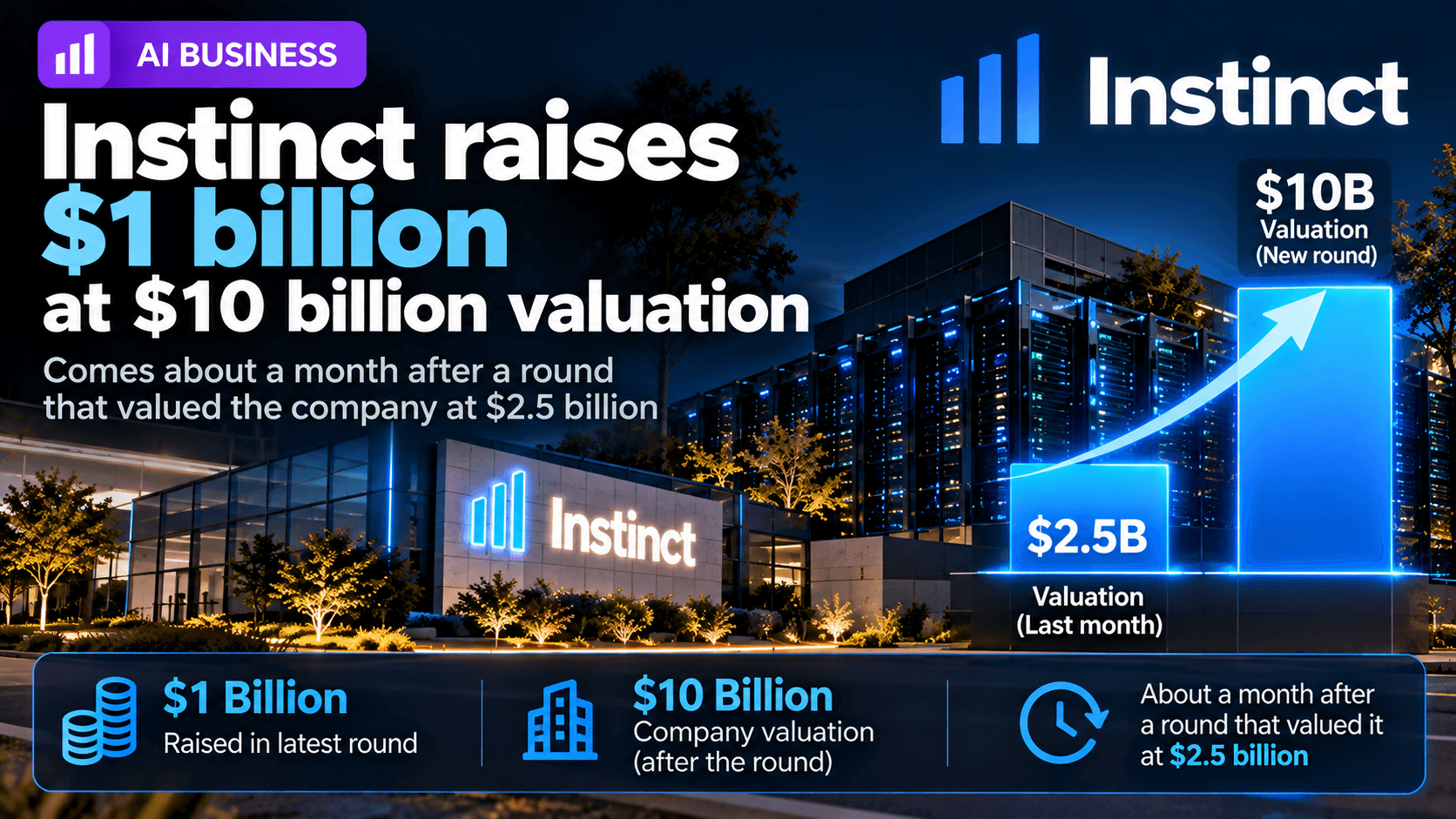
- Instinct raised $1bn from Sequoia, Benchmark and Coatue at a $10bn valuation.
- A month earlier its fundraise valued the start-up at $2.5bn, TechCrunch reported.
- The agent is still in early access, and Instinct has not shared user or growth numbers.
Instinct, a start-up whose AI agent runs errands for people who text or call it, said on Monday, September 28, that it had raised $1 billion from Sequoia Capital, Benchmark Capital and Coatue at a $10 billion valuation. TechCrunch noted that it had "only been a month" since a fundraise valued the company at $2.5 billion.
A fourfold rise in a month is fast even by this year's standards. It is faster still for a product that the company says is "still in early access", and whose makers have not shared user numbers or growth metrics.
What the money is buying
Instinct says it is "building a personal agent for everyday life". The pitch is that you never open an app or fill in a form. "Just text or call, and Instinct uses its own phone and computer to get it done," the company says, listing jobs such as planning a road trip, ordering the weekly groceries and cancelling forgotten subscriptions.
The round came with three features. Concierge handles "high-touch cases, such as making phone calls" and high-end bookings. A Trusted Person Network lets one user's Instinct talk to other people's Instincts to coordinate plans. And location sharing on iMessage lets the agent notice when a user arrives somewhere. "This funding helps us bring Instinct to more people and continue building the future of personal AI," said the founder, Noah Shinn.
Instinct opened as an invite-only service in August. When it announced its previous round, TechCrunch described Shinn as 23 and the company as founded only the year before. That Series B raised $250 million, was co-led by Index Ventures and Benchmark, and took total funding to $350 million. Add Monday's round and, on those figures, Instinct has raised about $1.35 billion.
Why investors are paying up
The likelier reading is that investors are not paying for revenue, which Instinct has not disclosed, but for a position. An agent that holds your accounts and runs your errands becomes the place where spending starts. Whoever owns that relationship could sit in the middle of a great deal of commerce.
The trouble is that much bigger companies want the same position. TechCrunch notes that Instinct "is now facing fresh competition from Meta's own AI assistant, Muse", which can do much of what Instinct does. Meta began rolling Muse out in the US on September 8. A start-up's edge against that is speed and focus. Its weakness is distribution.
The trust problem under all of it
An agent with its own phone and computer, acting on your accounts, is only as good as its limits. Instinct has had to learn that in public. TechCrunch wrote that the first version of its privacy policy "was particularly worrisome due to its overreach" and has since been updated. In August it reported users' worries about "the overly generous permissions that the app requires".
The company's answer, in its announcement, is "isolated sandboxes, short-lived local credentials, and identity-signed tool execution", along with a system meant to catch hallucinations as the agent forms its responses. Those are the right words. None of them has been checked by anyone outside the company.
The timing makes the point for you. On the same Monday, Nvidia launched an agent-safety platform built on the idea that controls must sit where an agent cannot reach them, arguing that "an agent in these circumstances cannot be expected to fully govern its own behavior". Instinct is asking people to hand an agent their daily lives on the strength of controls it describes but has not shown.
What to watch
Three numbers would tell you whether $10 billion is a price or a bet: how many people use Instinct every week, what they pay, and how often the agent gets a task wrong. Instinct has published none of them. Watch too for when the early-access gate lifts, and whether the Trusted Person Network, in which agents coordinate with other people's agents, comes with clear consent rules.
- Funding
- AI agents
- Instinct
- Sequoia
- Consumer AI
Sources
- Instinct Raises $1 Billion in Series C Funding from Sequoia, Benchmark and Coatue at $10 Billion Valuation — Instinct (via Business Wire / FinancialContent), Sep 28, 2026
- Viral AI agent Instinct raises $1B Series C at a $10B valuation — TechCrunch, Sep 28, 2026
- Viral AI startup Instinct has raised $350M at a $2.5B valuation — TechCrunch, Aug 26, 2026
- Introducing Muse: The World's First Personal AI Agent Built for Everyone — Meta, Sep 8, 2026
- NVIDIA Open Agent Safety Platform: A Reference for Continuous In-Silicon Agent Monitoring — NVIDIA Technical Blog, Sep 28, 2026
Related stories
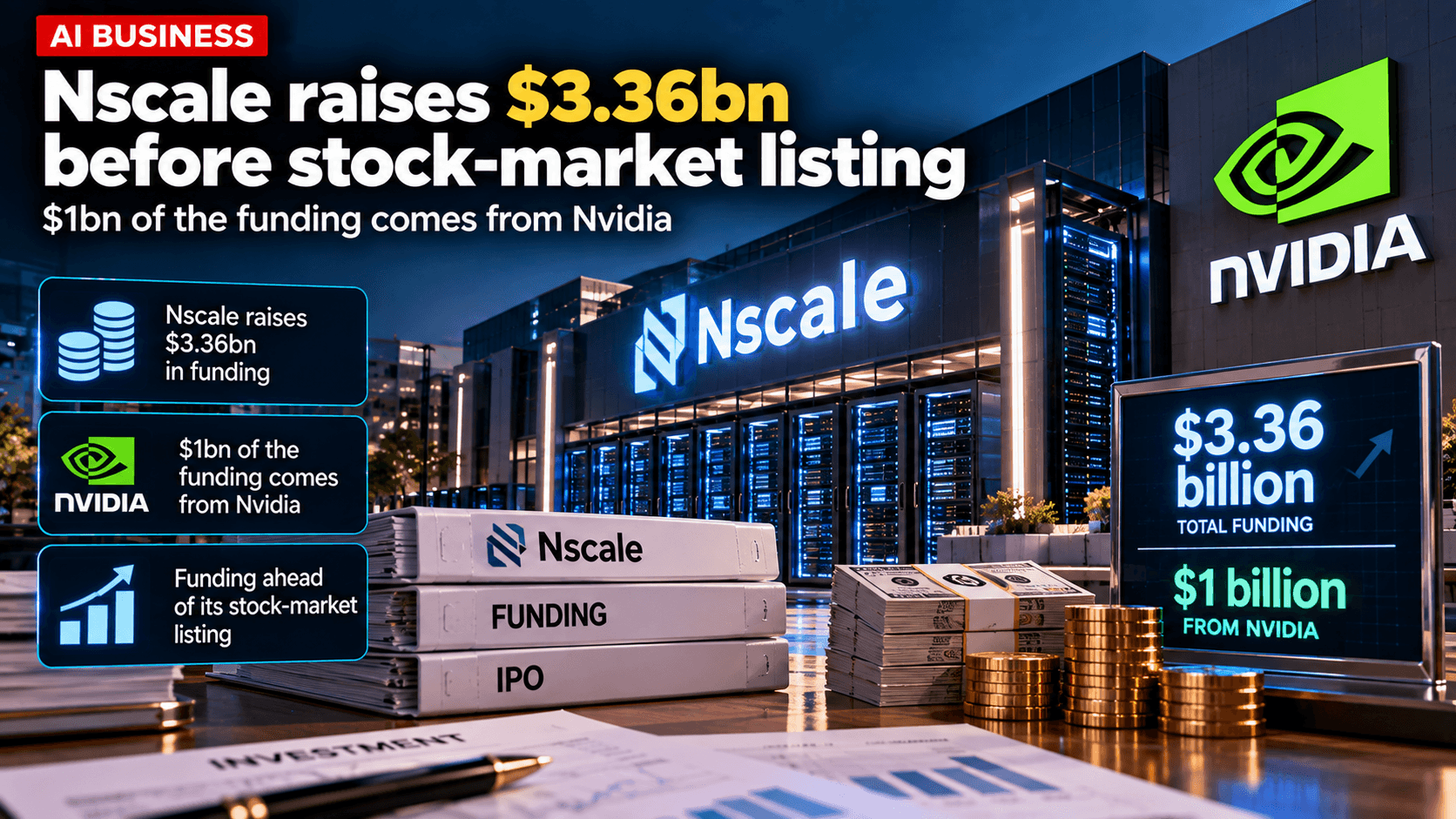
Nscale raises $3.36bn before its IPO, with $1bn from Nvidia
The British AI cloud firm’s convertible notes turn into shares when it lists. Its filing shows most of its $103bn contract book depends on Microsoft and Anthropic.
3 min read
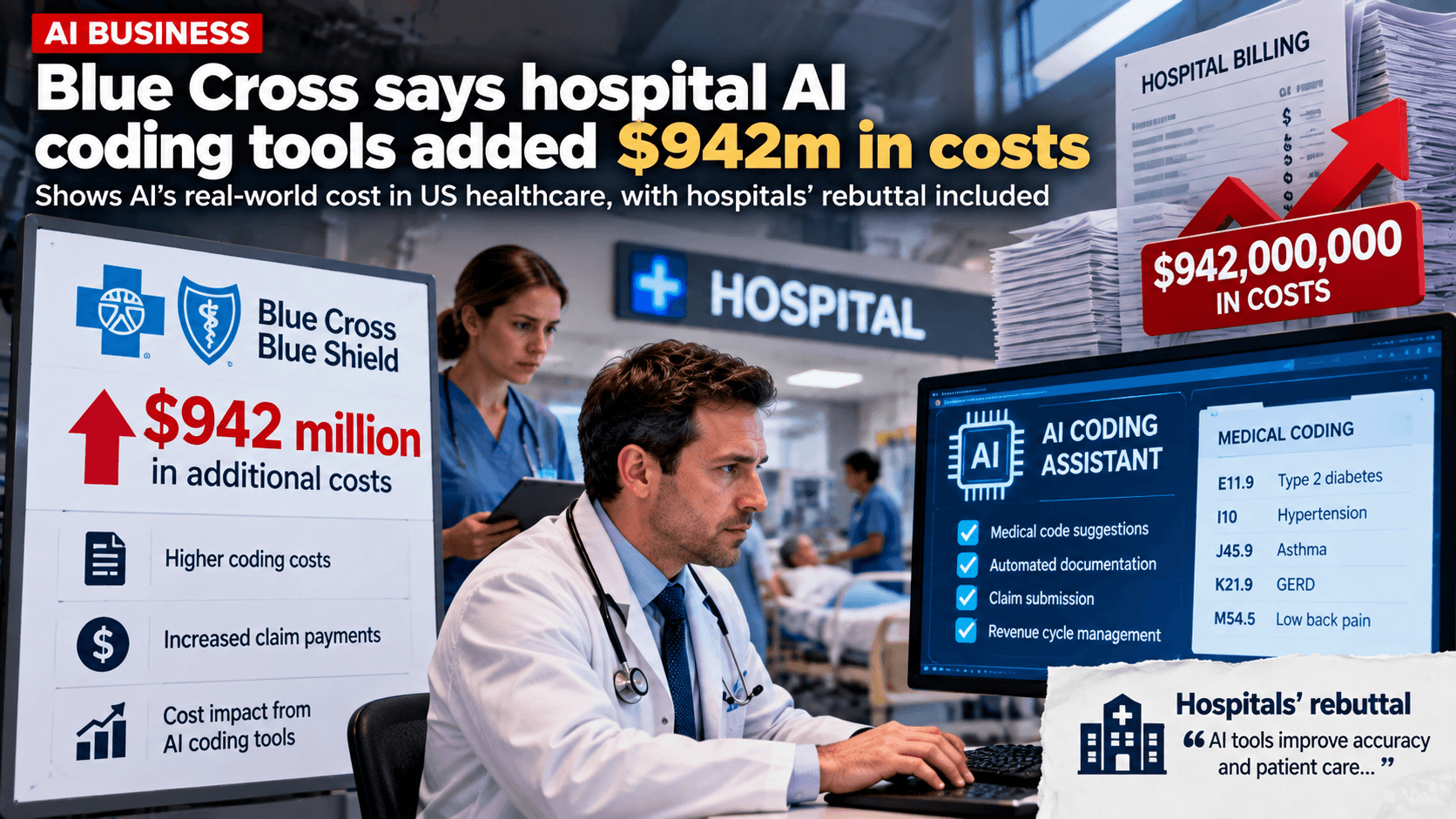
Blue Cross says hospital AI coding tools added $942m in costs
The insurers' association says more patients were billed as complex without getting more treatment. Hospitals answer that their patients really are sicker, and that insurers use AI too.
3 min read

Microsoft pledges $10bn-plus for Gulf cloud and AI despite the war
Brad Smith says Microsoft is keeping every investment it planned before the conflict began on February 28 and adding to them: more than $10 billion across the UAE, Saudi Arabia, Qatar and Kuwait by 2030, plus $400 million for cables.
3 min read
Comments
No comments yet. Start the conversation.