Microsoft pledges $10bn-plus for Gulf cloud and AI despite the war
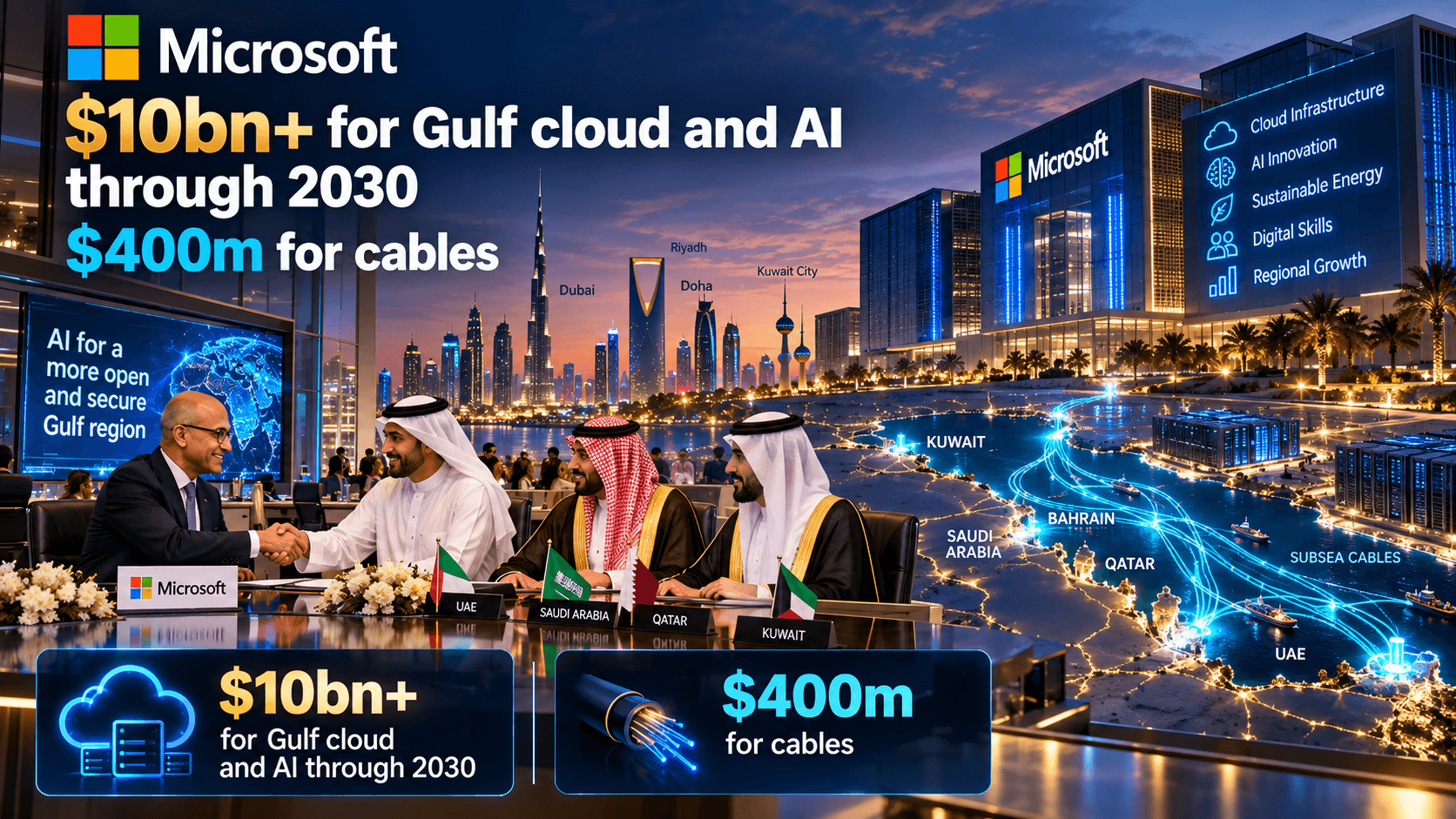
Brad Smith says Microsoft is keeping every investment it planned before the conflict began on February 28 and adding to them: more than $10 billion across the UAE, Saudi Arabia, Qatar and Kuwait by 2030, plus $400 million for cables.
Key takeaways
- Microsoft will spend over $10bn on cloud and AI across four Gulf states between 2026 and 2030.
- Another $400m-plus goes to subsea and land cables by 2030, including SeaMeWe-6 landings.
- Brad Smith: all pre-war plans stand and more is being added; no per-country split was given.
Microsoft said on September 23 that it will spend more than $10 billion in capital and operating expenses on cloud and AI across the United Arab Emirates, Saudi Arabia, Qatar and Kuwait between 2026 and 2030, in a framework announced on the sidelines of the UN General Assembly. "We're sustaining all the investments we planned to make before this conflict started, and we're in fact adding to them," Brad Smith, Microsoft's president, told Reuters. "It's an aggressive spending schedule."
The word doing the work in the announcement is resilience. Reuters notes that the conflict began on February 28 and has included attacks on data centres, among them Amazon Web Services facilities in Bahrain and the UAE; the UAE has been largely spared since May while other Gulf countries have continued to face threats. Microsoft's answer is a Middle East Digital Resilience initiative, more than $400 million for subsea and terrestrial connectivity by 2030, and sovereign public and private cloud offerings for customers who want their data and their continuity plans inside the region.
What is in the package
Microsoft groups its commitments under three headings. Under technology: expanding cloud and AI infrastructure across the four countries, and deeper work with the national AI champions, HUMAIN in Saudi Arabia, G42 in the UAE, QAI in Qatar and the government of Kuwait, plus digital-government programmes such as TAMM in the UAE, ALLaM in Saudi Arabia and TASMU in Qatar. Under resilience: the continuity initiative, the connectivity money, which includes the SeaMeWe-6 subsea cable with landings in Qatar, Saudi Arabia and the UAE, the sovereign clouds and a programme called Project Digital Shield, cybersecurity partnerships with national authorities in all four states, and responsible-AI work with G42 and the Mohamed bin Zayed University of Artificial Intelligence. Under people: skilling programmes that Microsoft says aim to reach 4.2 million people by 2030.
What you will not find is a split by country or by project. Smith told Reuters the company could not provide one, citing security among the reasons. Microsoft is not planning capital investments in HUMAIN or QAI; its one equity position in the region's AI champions is the $1.5 billion minority stake it took in G42 in 2024, which came with a board seat. The National notes the framework sits alongside the Stargate project in Abu Dhabi, the G42, Microsoft and OpenAI venture building what is billed as the region's largest data centre.
Why say it now
The plain reading is that Gulf governments, which have become some of the largest buyers and financiers of AI infrastructure anywhere, needed to hear that a hyperscaler was not quietly retreating after cloud facilities in the region were hit. Smith's framing to The National makes the link explicit: the conflict "has reinforced the connection between digital resilience and digital sovereignty". Sovereign cloud, in other words, is now the product, and continuity is the pitch.
There is a second reading, which is that a $10 billion figure over five years in capital and operating expenses is not, for a company of Microsoft's size, a dramatic number, and that presenting existing plans plus additions as one framework is a way of turning a defensive story into an announcement. Both readings can be true. What is measurable is the cable money and the timelines, and those are the parts to hold Microsoft to.
What is not disclosed
How much of the $10 billion is new money rather than plans already made. What "operating expenses" covers. When new capacity opens, and where. Whether any of it depends on US export licences for the chips that would fill the data centres; the announcement does not mention chips at all. And what Microsoft's own facilities in the region experienced since February, which neither Microsoft nor Reuters spells out.
What to watch
SeaMeWe-6 landing dates in the three named countries. Whether Google, Oracle or AWS make equivalent public commitments, and what AWS says about the attacked facilities. Progress on the Abu Dhabi Stargate build. And whether the sovereign-cloud offerings come with anything beyond a promise: the test of digital resilience is a customer who kept running when the next data centre was hit.
- Microsoft
- data centres
- AI infrastructure
- Gulf
- Brad Smith
- sovereign cloud
Sources
- Microsoft Strengthens Its Commitment to the Middle East by Investing in Technology, Digital Resilience and People — Microsoft Source EMEA, Sep 24, 2026
- Microsoft plans $10 billion-plus Gulf investment with focus on resilience — Reuters via 93.3 The Drive, Sep 23, 2026
- Microsoft announces technology framework with UAE, Kuwait, Qatar and Saudi Arabia at UNGA — The National, Sep 23, 2026
Related stories
UK regulator wants AI assistants on Google’s choice screens
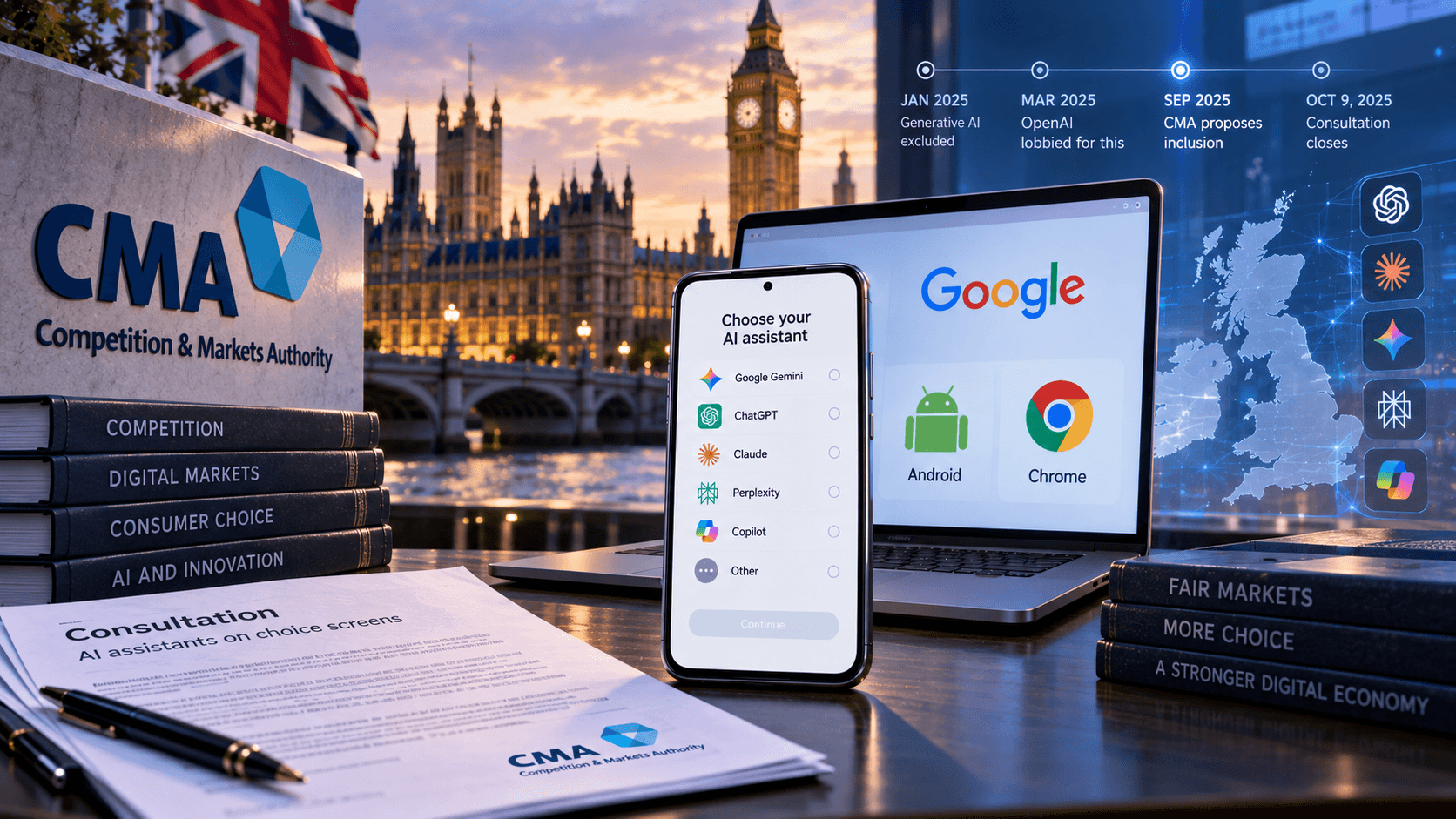
The CMA has reversed January’s exclusion of chatbots from the search choice screens Google must show Android and Chrome users, and kept the annual prompt Google objected to. Consultation closes October 9.
3 min read

Newsom signs seven data-centre laws on power costs, water and land
The bills signed on Monday create separate electricity tariffs for loads of 75 megawatts and more, require water-use disclosure before local approval, and pull data centres out of blanket environmental-review exemptions.
3 min read

45 US data centre projects worth $68bn blocked or delayed in Q2
Data Center Watch now counts 843 local opposition groups in 49 states. The dollar figure fell from the first quarter, yet more than half of newly tracked projects ran into trouble.
3 min read
Comments
No comments yet. Start the conversation.