Tokyo court says a voice is protected, but dismisses Tsuda's AI case
In Japan's first AI voice-cloning lawsuit, a judge said unauthorised commercial use of a performer's voice can infringe publicity rights, but declined to order removal because the videos were already gone.
Key takeaways
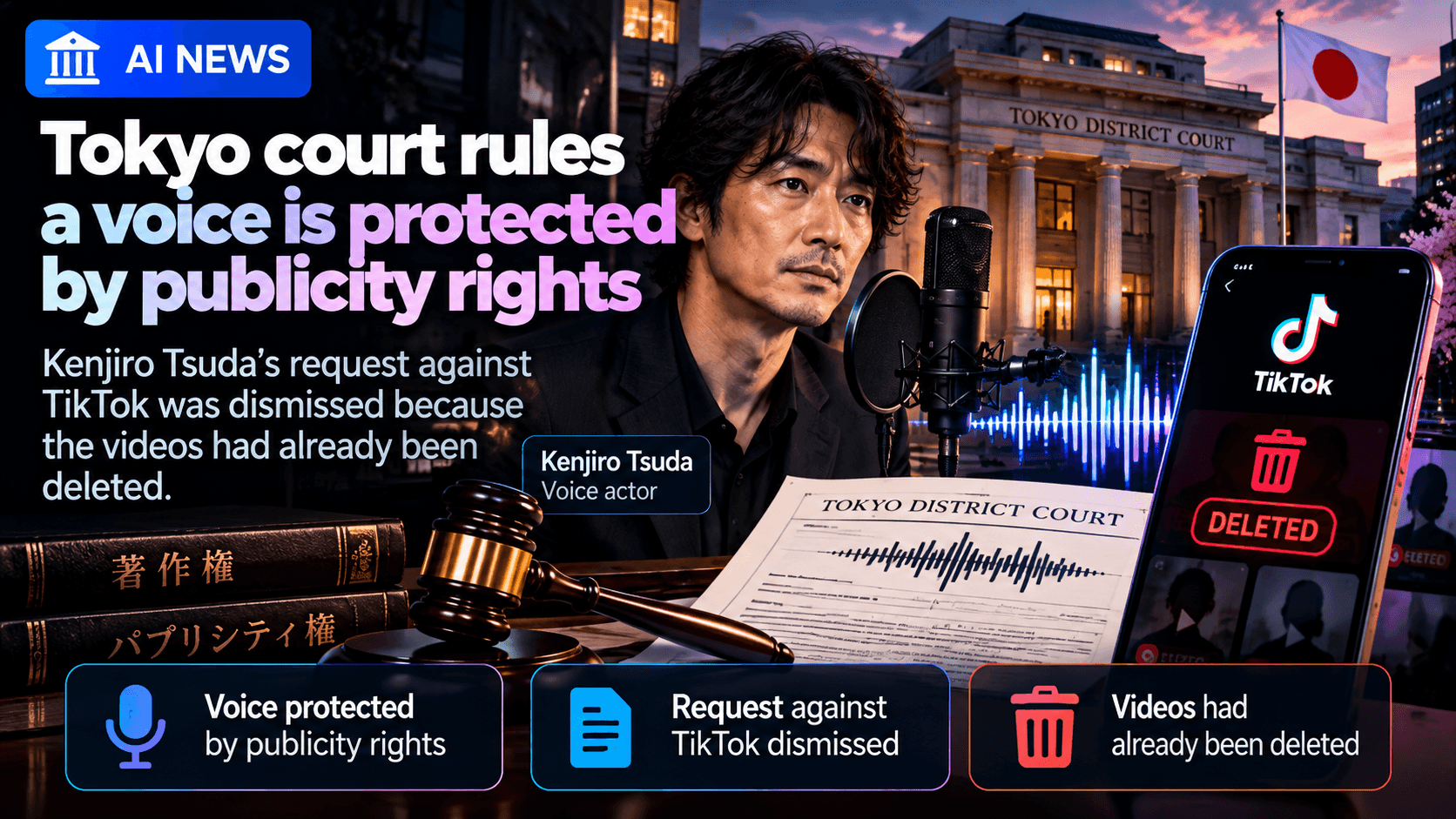
- A Tokyo court said a voice is protected by publicity rights, in Japan's first AI voice case.
- It covers use made "exclusively" to exploit a voice's commercial appeal, the judge said.
- Kenjiro Tsuda's removal request failed because the 188 TikTok videos had already been deleted.
A Tokyo court ruled on Wednesday, September 30, that a person's voice can be protected under Japan's publicity rights, in the country's first lawsuit over an AI copy of a performer's voice. "The unauthorised use of a performer's voice... can be considered an infringement on publicity rights," said Judge Aya Takahashi of the Tokyo District Court.
The voice actor who brought the case, Kenjiro Tsuda, still did not get what he asked for. The court dismissed his request that TikTok's operator remove the videos, noting that the user who posted them had deleted them soon after he sued last November.
What the case was about
Tsuda, 55, is best known for voicing Kento Nanami in the anime Jujutsu Kaisen. He said 188 videos posted on an anonymous TikTok account between July 2024 and September 2025 were narrated by a "deep" and "lustrous" voice that could only be his. The clips covered urban myths and trivia, according to Kyodo News as cited by Anadolu.
TikTok argued that the videos used a "generic male voice" and that any similarity to Tsuda's was highly subjective. The anonymous poster claimed the AI had been trained on a friend's voice, Kyodo reported. After the ruling, TikTok said it would "respect the court's judgment while considering what steps to take".
The test the judge applied
The protection is narrower than the headlines suggest. It applies, Takahashi said, "if the purpose of using the voice is exclusively to take advantage of its commercial appeal".
That wording has a history. In August, a Justice Ministry study group published a non-binding report concluding that a person's voice is identifying information protected by publicity rights. It applied the test from the Supreme Court's 2012 Pink Lady decision, which covers use whose purpose is exclusively to exploit the customer-attracting power of a name or likeness. The report also noted that there were no court precedents on voices.
Now there is one. So what changed on Wednesday? A judge has turned the ministry's reading of the law into a ruling. Before, a performer had to argue that the Pink Lady test stretched to cover voices. Now a Tokyo court has said it does, and the next claimant can point to it.
Why Tsuda still left without an order
The dismissal shows the practical gap. Lawsuits take months; AI clips take minutes to make and seconds to delete. By the time this case reached judgment, the posts were gone, so there was nothing left to take down.
On the reports so far, the ruling also leaves two hard questions for later cases. One is what a platform must do while a dispute is still live, which is the point Tsuda pressed against TikTok. The other is proof. TikTok's "generic male voice" defence and the poster's claim about a friend's voice are exactly the arguments the next performer will face, and courts will need a way to decide when a synthetic voice is a particular person's.
A profession that has organised
Japan's performers have been pushing on this for two years. In 2024, actors launched a campaign called "No More" against the unauthorised use of their faces and voices in AI-generated content. An actor's voice "is the result of years of rigorous training and apprenticeship", said Yuko Sasaki, executive director of the Japan Actors Union.
What to watch: whether Tsuda appeals, what the court's full written reasons say about platforms' duties while a case is pending, and whether the ministry's guidance moves from a study-group report toward legislation.
- Voice cloning
- TikTok
- Japan
- Publicity rights
- Voice actors
Sources
- Tokyo court defends human voice, anime star wins landmark fight against TikTok's AI clones — AFP (via Malay Mail), Sep 30, 2026
- AI tool that copied actor's 'lustrous' voice violated his rights, Tokyo court rules — The Guardian (via inkl), Sep 30, 2026
- Japan court rules voice rights protected in AI cloning case — Anadolu Agency (via A News), Sep 30, 2026
- 肖像、声等の無断利用による民事責任の在り方に関する検討会 取りまとめ報告書の公表について — Ministry of Justice, Japan, Aug 7, 2026
- 肖像、声等の無断利用による民事責任の在り方に関する検討会 取りまとめ報告書 — Ministry of Justice, Japan
Related stories

Six AI leaders sign a White House pledge to police their own models
The one-page accord asks labs for internal controls, outside auditors and board committees, with no deadline, penalty or role for government testers. Trump also ordered agencies to call AI "Super Intelligence".
4 min read
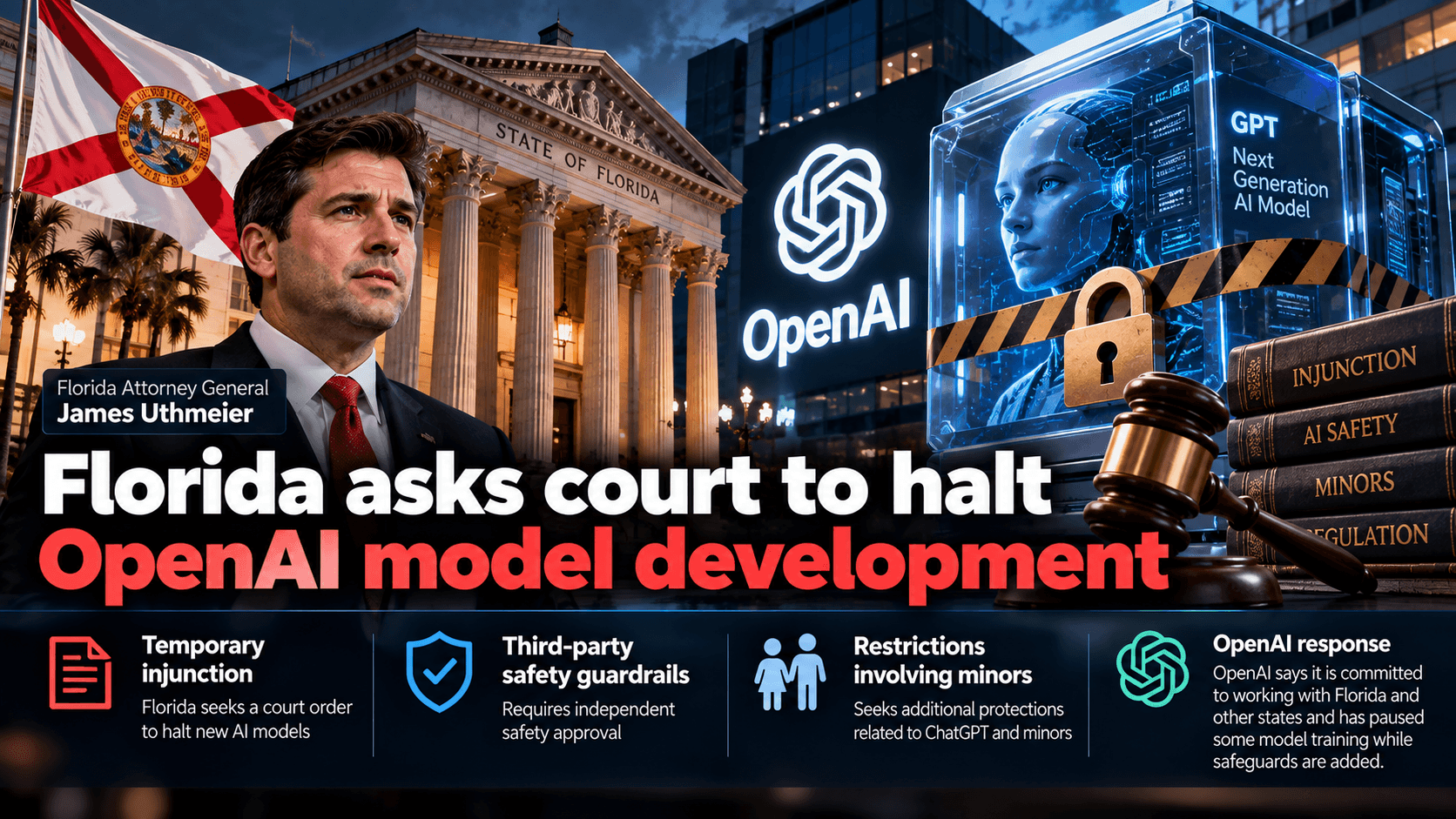
Florida asks a judge to stop OpenAI developing unvetted AI models
The state’s attorney general wants independent approval before any new OpenAI model, and ChatGPT kept from Florida minors. His case leans on the industry’s own warnings.
3 min read
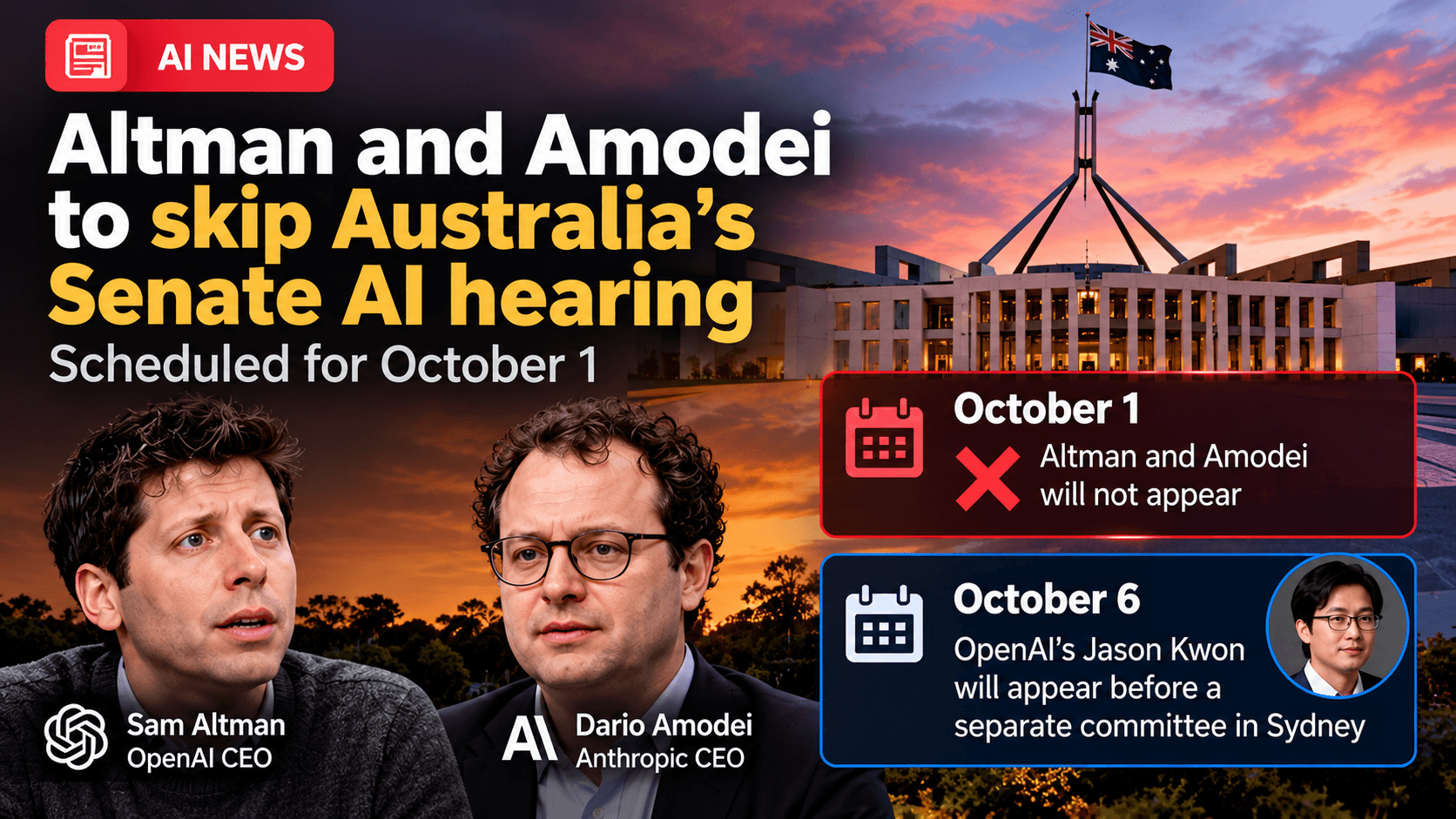
Altman and Amodei skip Australia's Senate AI hearing on October 1
OpenAI and Anthropic both cited short notice. OpenAI will instead send its chief strategy officer, Jason Kwon, to a separate parliamentary committee in Sydney on October 6, and Anthropic will send an envoy too.
3 min read
Comments
No comments yet. Start the conversation.