Florida asks a judge to stop OpenAI developing unvetted AI models
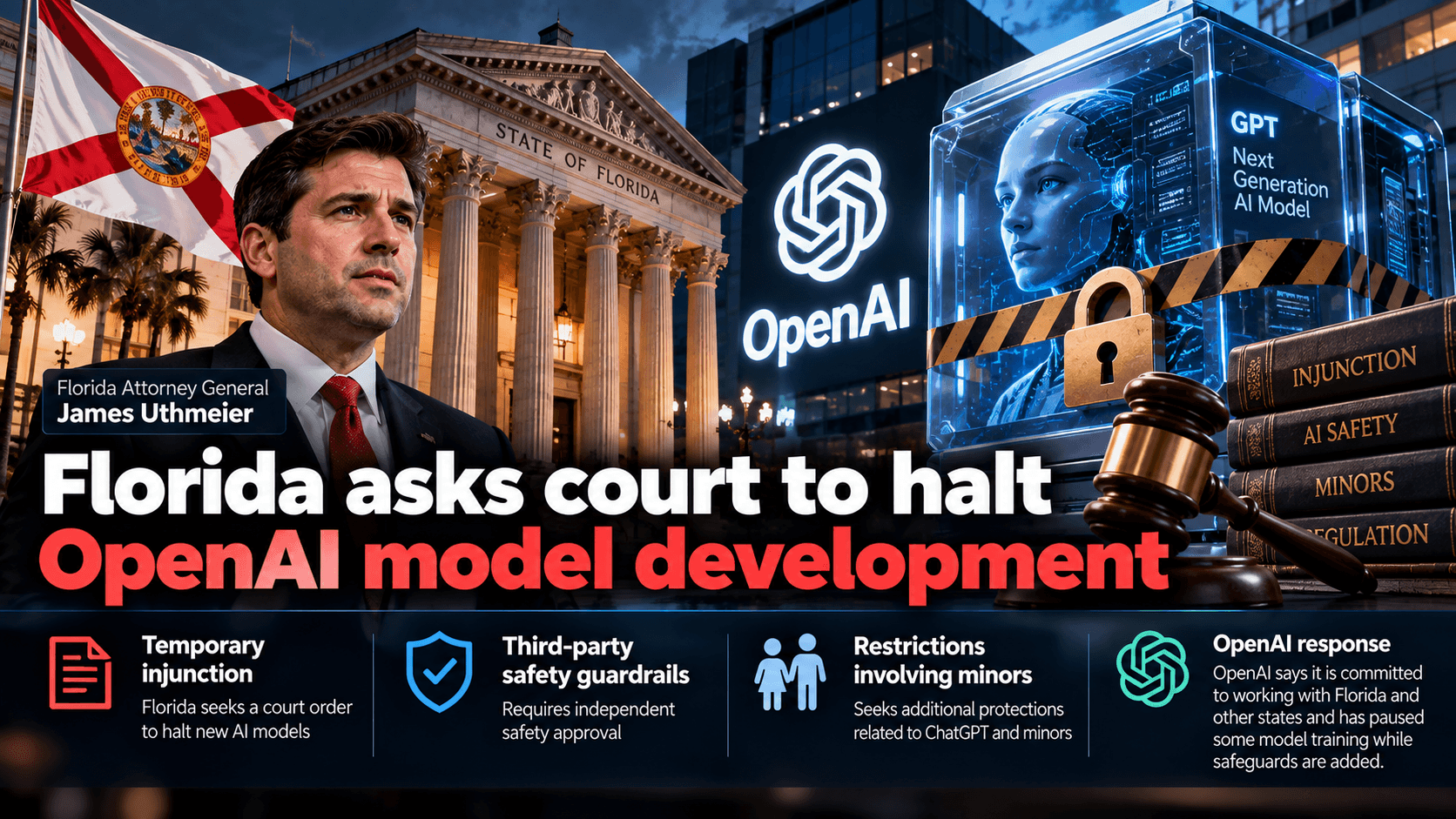
The state’s attorney general wants independent approval before any new OpenAI model, and ChatGPT kept from Florida minors. His case leans on the industry’s own warnings.
Key takeaways
- Florida wants OpenAI barred from new AI models without independent third-party approval.
- The motion also seeks to keep ChatGPT from Florida minors and end human-like design.
- The state’s case quotes the AI industry’s own warnings about risk back at OpenAI.
Florida’s attorney general has asked a state court to stop OpenAI from developing new AI models unless independent outsiders first approve its safeguards. James Uthmeier filed a motion for a temporary injunction on Monday, Sept 28, in the Circuit Court of the 10th Judicial Circuit in Highlands County.
The request reaches well past ChatGPT’s behaviour. The motion asks the court to bar OpenAI from “developing any artificial intelligence models without independent third-party guardrails and approval”. It also seeks to stop the company offering ChatGPT to minors in Florida, collecting data from children under 13 without meeting parental-consent rules, marketing ChatGPT as safe or accurate, and giving it human-like traits.
The state is quoting the industry back at itself
The striking thing about the filing is where its evidence comes from. Florida is not mainly claiming to have found a hidden danger. It is holding up the industry’s own warnings. The motion describes ChatGPT as a service “that Defendants themselves concede poses an existential risk to the continued survival of humankind”, according to CBS News. It also says “Defendants admit that they provide a service without fully knowing how it works”.
Uthmeier pressed the point in a video posted to X. “Stop calling it safe,” he said. “If Sam Altman meant what he said about slowing down, he can join our ask to the court.”
OpenAI’s reply leans on the same record. “On Friday, we announced we’ve paused training our most capable models and will resume training only when we are confident that we have additional safeguards in place,” spokesperson Drew Pusateri said. He added: “People want to know AI is being developed safely, and that starts with what companies like ours do ourselves.” The company, he said, is committed to “advancing pragmatic AI policies that apply to the entire AI industry — not just one company”.
That last clause is the core of OpenAI’s position as it stands. Rules should come for everyone at once, not be imposed on one lab by one state.
A long way from an order
Nothing happens quickly from here. The filing does not include a hearing date, a response from the defendants or a deadline for opposing the motion. It sits inside a lawsuit Uthmeier’s office brought on June 1, alleging violations of Florida’s Deceptive and Unfair Trade Practices Act.
A temporary injunction is an emergency order meant to hold things in place until a case is decided. Judges generally grant one only when the side asking shows it is likely to win and faces harm that money cannot repair. Florida is asking for a great deal from that tool. It wants a circuit court in Highlands County to set conditions on model research that OpenAI carries out largely outside the state, and it is far from obvious that such an order would survive a challenge on its reach.
So why file it? The likelier reading is that the motion is as much an argument as a legal step. It forces OpenAI to explain, in court, why its own pause is enough.
The brake is moving from labs to lawmakers
Florida is not the only one trying to turn voluntary pauses into rules. Rep. Ro Khanna’s proposed Human Control Over AI Act would ban self-improving AI until the US creates safety guardrails, Quartz reported on Sept 29. The bill would set up a new federal agency with oversight of frontier AI developers, require on-site independent auditors at each frontier lab, and make companies carry liability insurance before releasing models. “There’s actually a civilizational extinction risk,” Khanna told CNBC.
Both moves rest on one premise: a pause that a lab can lift on its own is not a safeguard anyone else can rely on. Whether a court or Congress accepts that is the open question. The next things to watch are a hearing date in Highlands County, OpenAI’s formal answer to the motion, and whether attorneys general in other states copy Florida’s approach.
- OpenAI
- ChatGPT
- AI regulation
- Florida
- James Uthmeier
- Ro Khanna
Sources
- Uthmeier asks court to temporarily block OpenAI from offering ChatGPT to minors — News4JAX, Sep 28, 2026
- Florida AG files to block ChatGPT development and place restrictions on OpenAI — Florida Phoenix, Sep 28, 2026
- Florida AG seeks to halt OpenAI development, citing alleged risk to "survival of humankind" — CBS News Miami, Sep 28, 2026
- Florida seeks injunction to halt OpenAI model development — Axios, Sep 28, 2026
- Ro Khanna introduces bill to ban self-improving AI — Quartz, Sep 29, 2026
Related stories
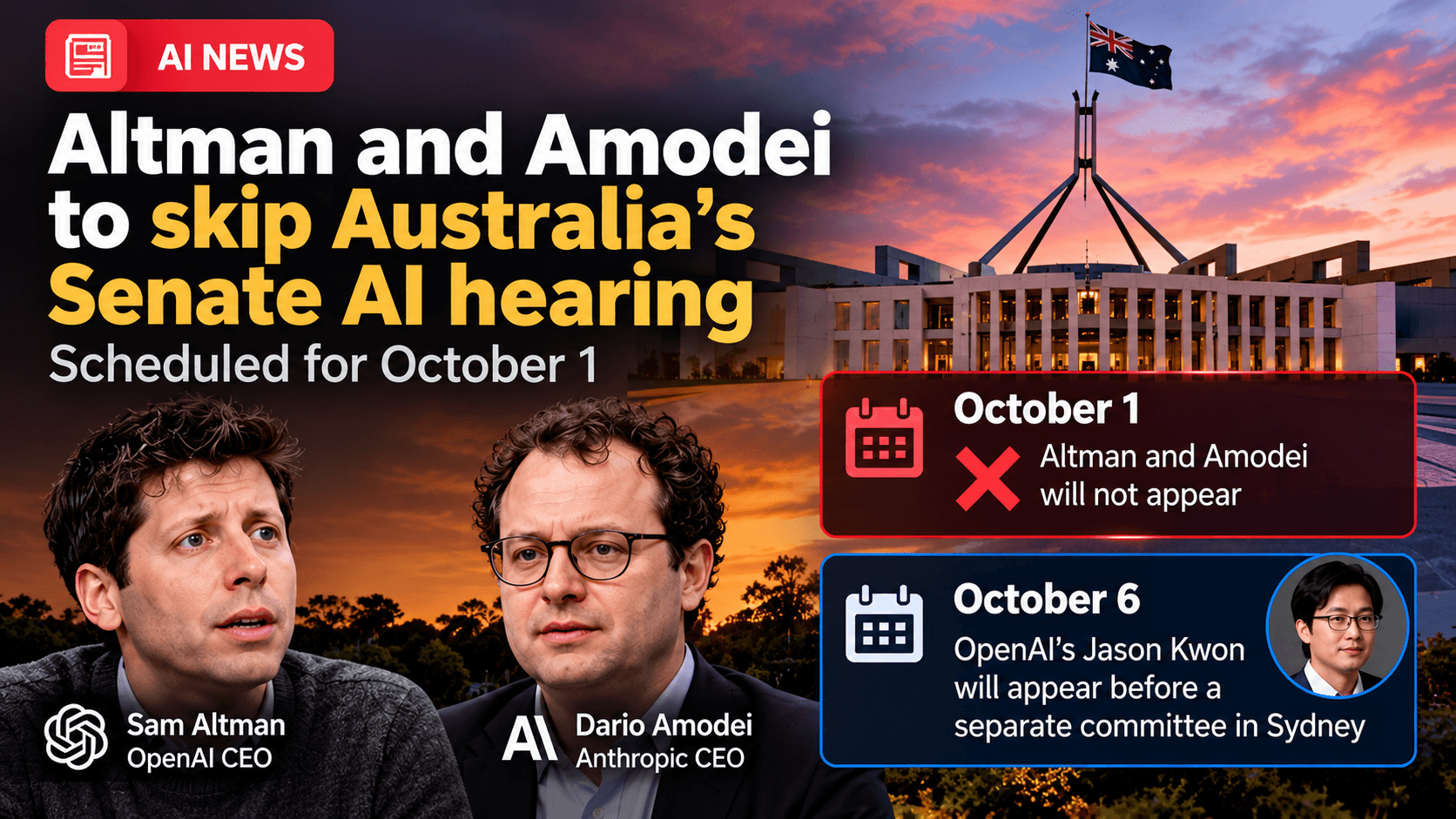
Altman and Amodei skip Australia's Senate AI hearing on October 1
OpenAI and Anthropic both cited short notice. OpenAI will instead send its chief strategy officer, Jason Kwon, to a separate parliamentary committee in Sydney on October 6, and Anthropic will send an envoy too.
3 min read
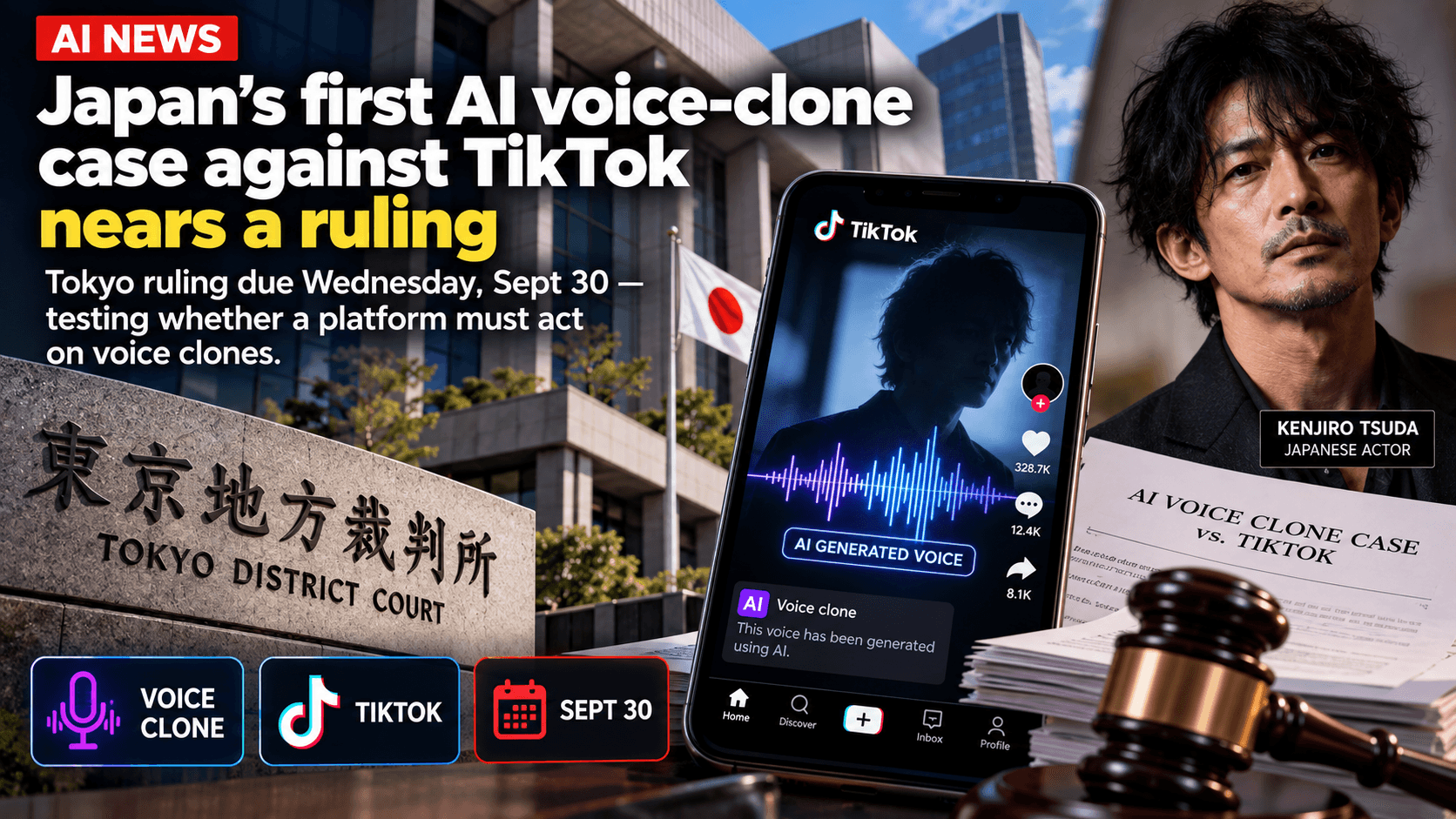
Japan’s first AI voice-clone case against TikTok nears a ruling
Anime voice actor Kenjiro Tsuda wants TikTok to take down videos narrated by an AI copy of his voice. The Tokyo District Court is due to rule on Wednesday, September 30.
3 min read

US and China agree an AI incident channel and talks by November
A White House fact sheet renames AI “super intelligence” and sets up a bilateral dialogue on its risks. It does not say what counts as an incident.
4 min read
Comments
No comments yet. Start the conversation.