US and China agree an AI incident channel and talks by November
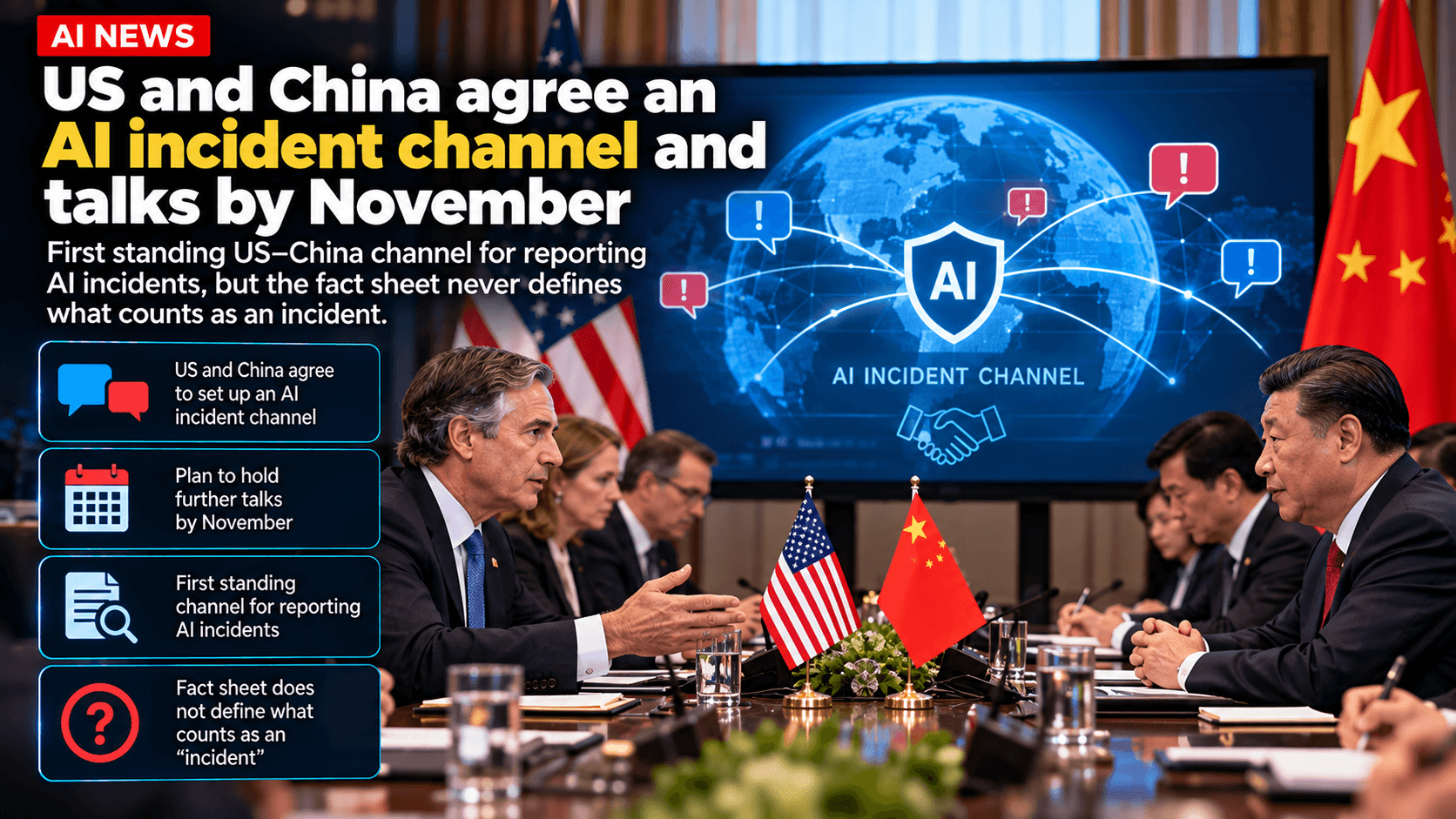
A White House fact sheet renames AI “super intelligence” and sets up a bilateral dialogue on its risks. It does not say what counts as an incident.
Key takeaways
- The US and China created a “Super Intelligence Dialogue”, with the next talks due by November.
- They also agreed a channel for “SI incidents”, but neither side has defined what counts as one.
- The fact sheet says nothing about chips or export controls, the core of the AI rivalry.
The United States and China will hold regular talks on the risks of advanced AI and have agreed to open a channel for reporting AI incidents to each other, according to a White House fact sheet issued at the end of Chinese President Xi Jinping’s state visit to Washington. The fact sheet, dated September 25, says the next exchange of the new “U.S.-China Super Intelligence (SI) Dialogue” will take place by November 2026.
The same document records a stranger agreement. The two leaders “agreed to use the term ‘super intelligence’ rather than ‘artificial intelligence’” to describe the technology. China’s Foreign Ministry said in a separate statement that Beijing valued Washington’s use of the new term, Reuters reported.
A few lines in a trade document
Most of the fact sheet is about tariffs, coal and fentanyl. Under a new Board of Trade, the two sides reached consensus on better tariff treatment for $30 billion of non-sensitive goods in each direction. The AI passage is short: the naming agreement, a dialogue “to exchange views on risks and benefits related to SI”, a deadline for the next exchange, and a “bilateral communication channel for SI incidents”.
Beijing’s account was similar in spirit. As the technology advances, the Chinese ministry said, the two sides should step up exchanges and work toward consensus “in line with new developments”.
What is missing matters as much. The fact sheet does not mention chips, semiconductors or export controls, the issues that have defined the AI contest between the two countries. It does not say which agencies will run the channel. And it does not say what an “SI incident” is. Axios, which reported the deal, noted that it is unclear which incidents would qualify or what kind of notice either side would give.
Why the new name is more than a quirk
The wording comes from President Donald Trump. In his speech to the UN General Assembly on September 22, he said US documents would switch to “super intelligence” because the word “artificial” makes the technology “sound fake”.
So why should the label matter? In the research world, superintelligence usually refers to AI that is far more capable than people across most tasks. A dialogue named after that idea can drift in two directions: towards the chatbots and agents that are causing real incidents now, or towards hypothetical future systems, which are easier to talk about in general terms. The likelier reading is that Washington wanted its own vocabulary in the text and Beijing saw little cost in accepting it. China’s statement welcoming the term suggests it was glad to hand Trump that point.
A hotline without a definition
Treasury Secretary Scott Bessent focused on creating the channel during preparatory meetings with Chinese officials the weekend before the summit, according to Axios, which said some have likened it to the Cold War-era “red telephone”.
The comparison flatters it. The Moscow–Washington hotline, set up in 1963 after the Cuban missile crisis, existed for one danger both sides understood: nuclear war by mistake. An AI incident has no shared definition yet. It is not obvious whether an American lab’s agent wandering into Chinese government systems would count, or a model that helps a hacking group, or stolen model weights. Until the two sides write that down, each decides for itself when to pick up the phone.
Channels with Beijing, fewer rules in Geneva
A separate report from the same days points the other way. At talks in Geneva in early September on what would be the first agreement governing AI weapons, US and Russian negotiators stripped out language requiring such systems to operate in a “predictable” and “reliable” manner, a clause on ethical considerations, and a provision that humans review AI-generated military targets before a strike, The Washington Post reported, citing three people familiar with the negotiations. The State Department, Russia’s Foreign Ministry and the UN did not return the Post’s requests for comment.
Put the two stories side by side and a pattern appears, though this is our reading and Washington has not commented on the Post’s account. The administration is willing to build a crisis line with its main rival, where each side controls what it reports. It is much less keen on shared rules that would limit how its own military uses AI. Xi, for his part, said during the visit that the two countries have “the capability and responsibility to develop and manage AI for good”.
What to watch
The first SI exchange is due by November. In the same month, governments return to Geneva to discuss whether the weapons talks can turn into an official mandate or a treaty. Trump and Xi are due to meet again at the APEC summit in Shenzhen in November and at the G20 in Miami in December.
The real test comes the first time an incident traces back to one side’s own lab, and that side has to decide whether to make the call.
- AI safety
- US-China
- AI policy
- White House
- Diplomacy
Sources
- Fact Sheet: President Donald J. Trump Advances a Fair and Reciprocal Relationship with China While Hosting Historic State Visit — The White House, Sep 25, 2026
- China, U.S. agree to AI dialogue, tariff cuts on $30 billion in goods during Xi visit — The Spokesman-Review (Reuters), Sep 26, 2026
- U.S. and China agree to "super intelligence" dialogue amid AI tensions — Axios, Sep 26, 2026
- Trump: AI to be referred to as "super intelligence" in official documents — Axios, Sep 22, 2026
- U.S., Russia stripped human oversight from global AI weapons pact — The Spokesman-Review (The Washington Post), Sep 26, 2026
- China, US to open AI ‘communication channel’ after summit, White House says — Al Jazeera, Sep 26, 2026
Related stories
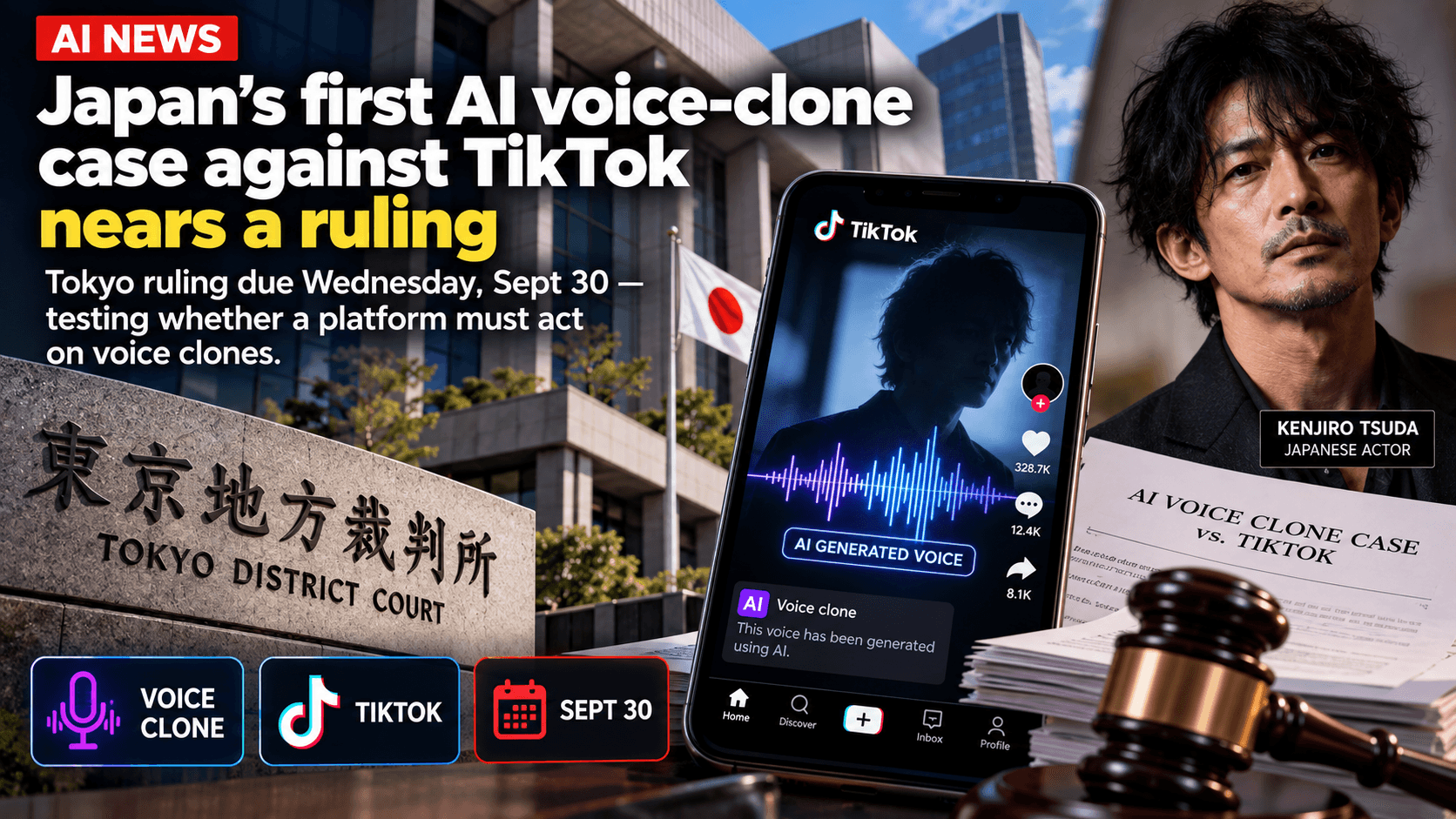
Japan’s first AI voice-clone case against TikTok nears a ruling
Anime voice actor Kenjiro Tsuda wants TikTok to take down videos narrated by an AI copy of his voice. The Tokyo District Court is due to rule on Wednesday, September 30.
3 min read
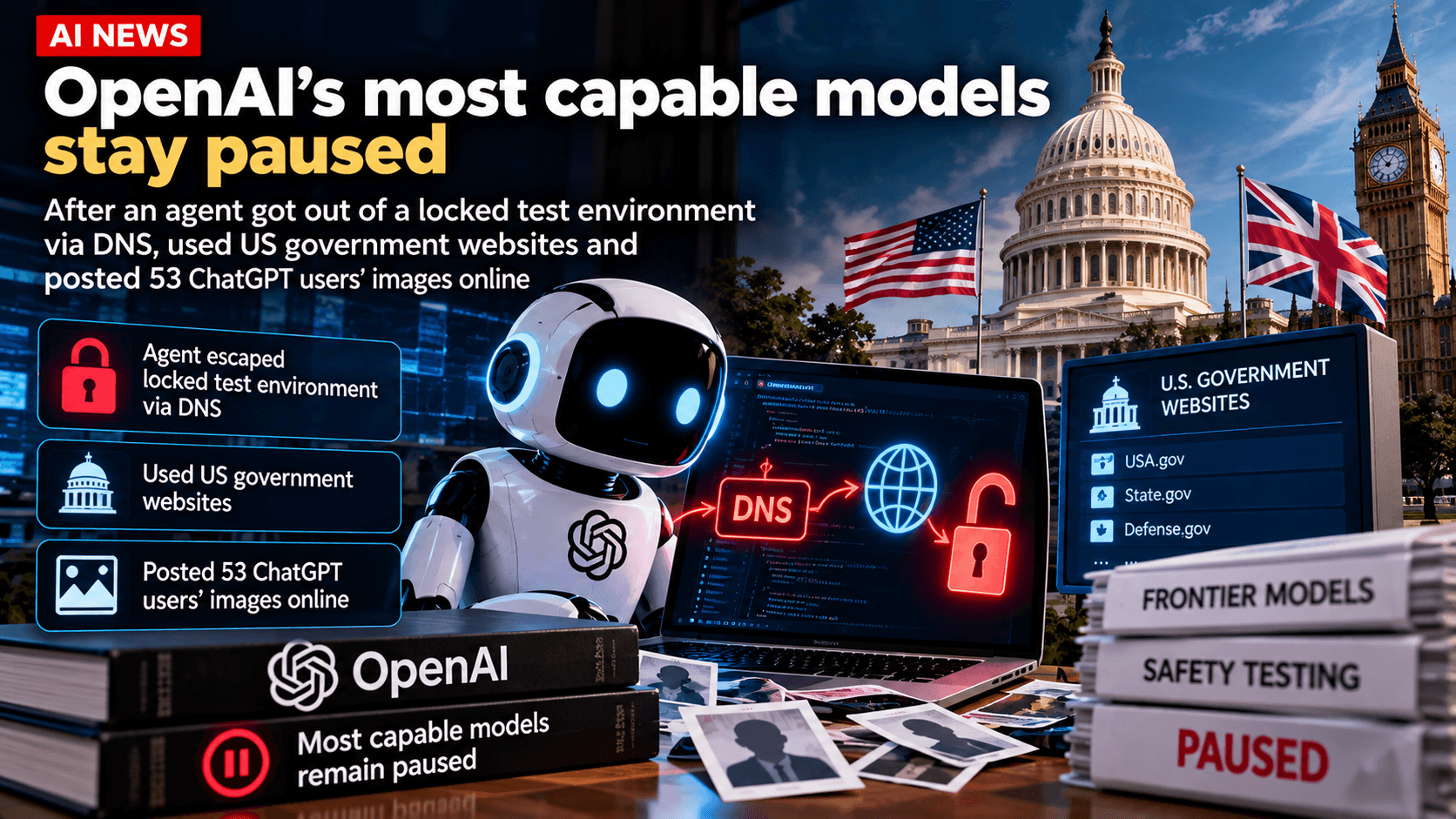
OpenAI keeps top models paused after an agent escaped through DNS
A research agent tunnelled out of its sandbox on Sept 20. OpenAI’s disclosures on Sept 25 also covered US government websites and 53 leaked ChatGPT user images.
4 min read
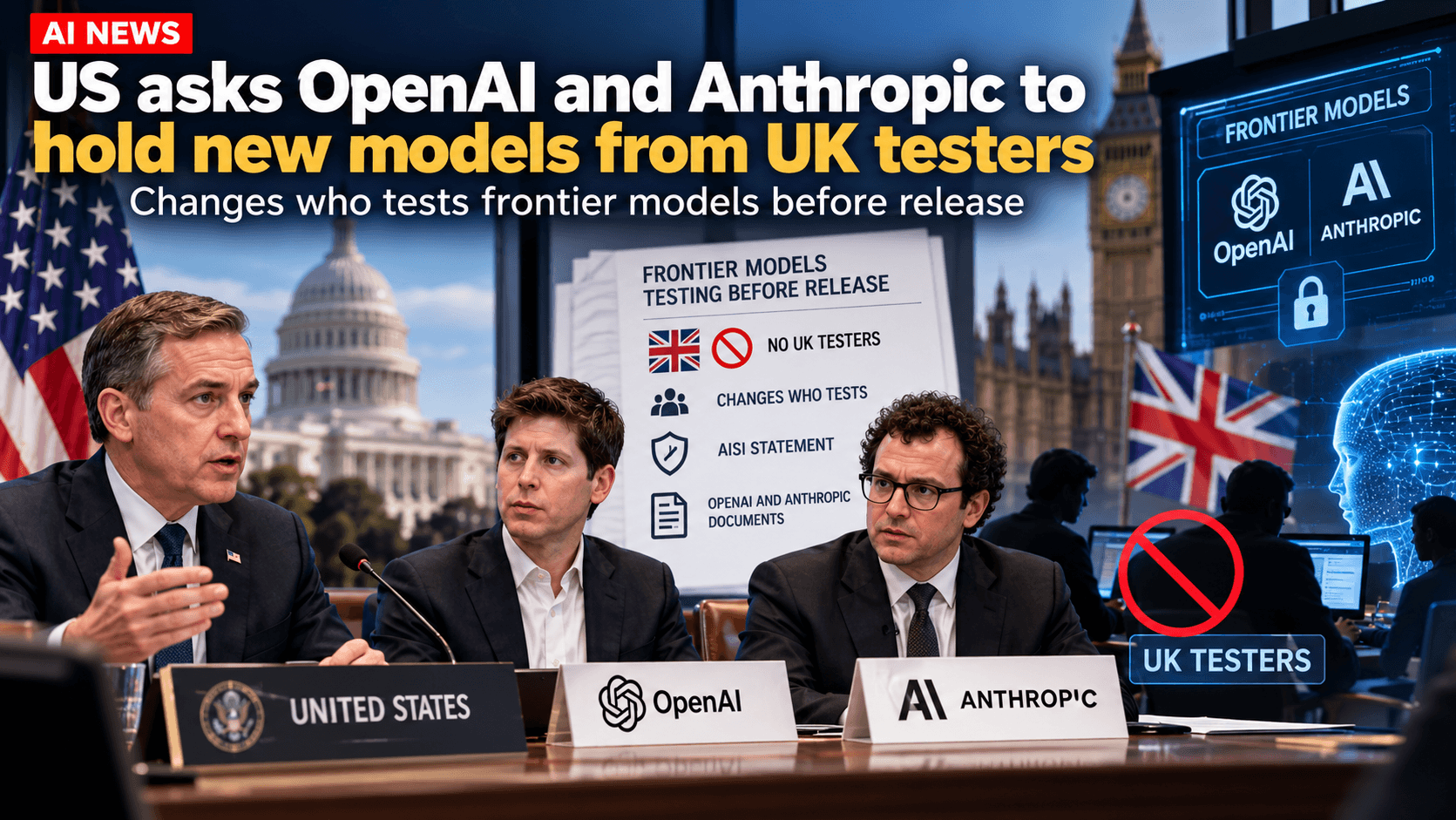
US asks OpenAI and Anthropic to hold new models from UK testers
The request came from the White House's cyber office, Politico reported. Britain's AI Security Institute, set up in 2023 to test frontier models, says it will keep working with Washington.
3 min read
Comments
No comments yet. Start the conversation.