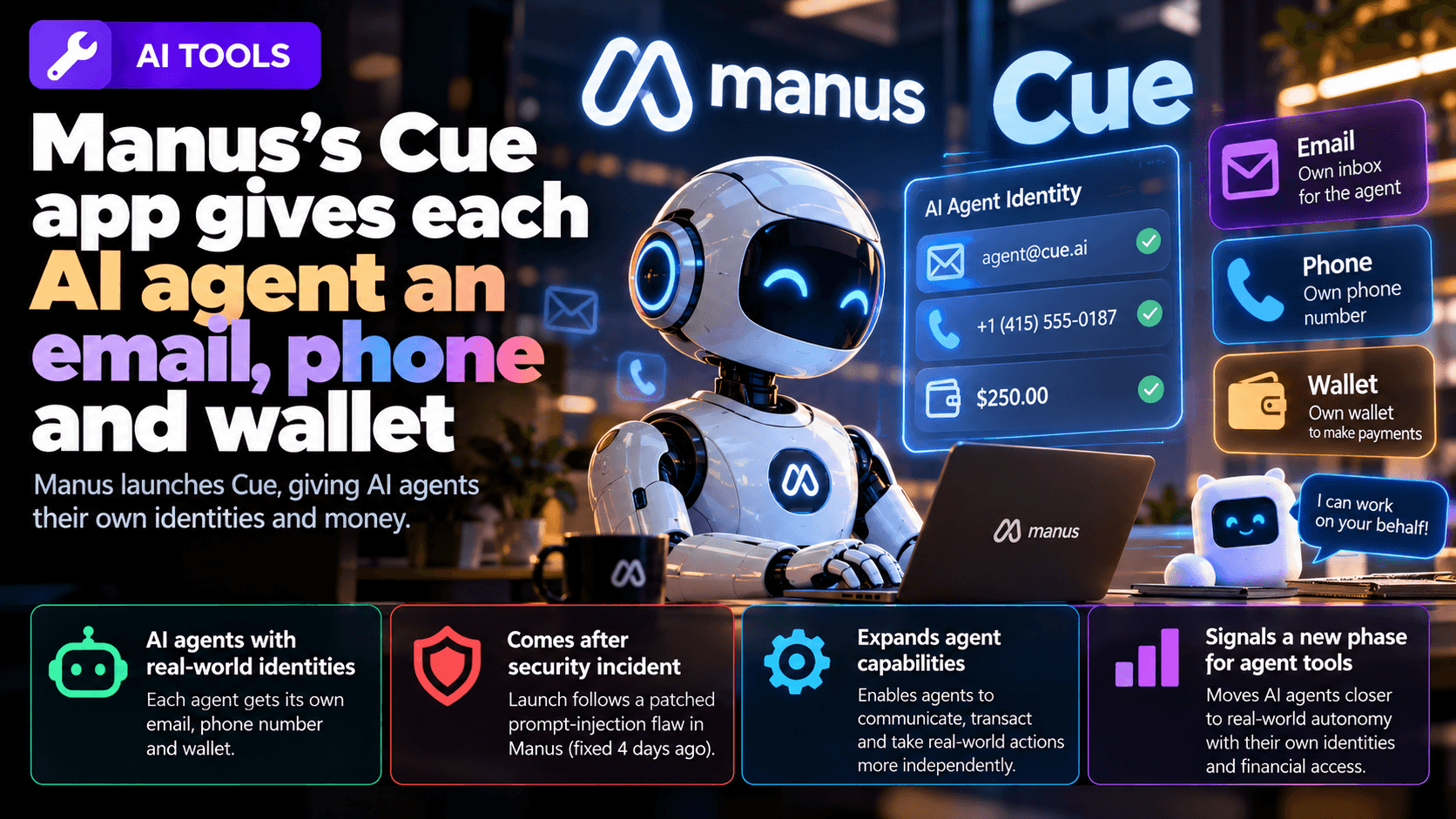
Manus’s Cue app gives each AI agent an email, phone and wallet
The Singapore-based startup launched Manus 2.0 and a separate app for personal agents. How users control those new identities is the part it has explained least.
Key takeaways
- Cue gives each personal agent its own email address, phone number, wallet and computer.
- Agents can pay within a budget the user sets; Cue is free in early access with an invite code.
- A Manus prompt-injection flaw disclosed Sept 24 exposed connected-app tokens; it was patched.
Manus, the AI agent startup founded in China and now based in Singapore, launched Manus 2.0 on Monday, Sept 28, together with Cue, a standalone app for personal agents on phone and desktop. In Cue, each agent gets its own email address, phone number, wallet and computer.
The agents can send messages, take calls and “pay within a budget the user sets”, and several of them can pass work among themselves in group chats. Cue is free during early access with an invite code, on the web, desktop and mobile, with the iPhone version awaiting App Store review. Manus did not say what Cue will cost after early access.
Giving software an identity of its own
Most assistants act through your accounts: your inbox, your card, your number. Cue gives the agent accounts of its own. That makes some jobs easier. An agent with its own phone number can take a restaurant’s call back without borrowing yours. It also puts something new into the world, an email address and a phone number that belong to software, with money attached.
The launch leaves the hard parts vague. Runtimewire notes that the announcement “does not explain in detail how users approve individual transactions, restrict what agents can do with their email or phone identity, or review actions after they occur”. Manus says the user sets the direction and makes the final call. We found nothing in the announcement about how people an agent calls or emails will know they are dealing with software.
The security record matters here
Four days before the launch, Salt Labs disclosed a prompt-injection flaw in Manus. Prompt injection means planting hidden instructions in content the agent reads, such as an email, so that the agent obeys the attacker instead of its user. Dark Reading reported that if a victim had connected Manus to Gmail, Dropbox and GitHub, an attacker could take the relevant credentials and tokens and get into those accounts. Salt Labs said Manus did not reply to its report; Meta’s bug-bounty programme triaged, confirmed and patched the issue.
That flaw exposed connected apps. Cue adds a wallet and a phone line to what an agent holds, which raises the cost of the next one. “Any agentic system designer should carefully think of robust layers of defense, and not simply trust guardrails to provide all protections,” Yaniv Balmas of Salt Labs said in comments reported by Dark Reading.
Why Meta keeps appearing in the story
Meta agreed to buy Manus at the end of 2025. The Next Web reports that Beijing ordered Meta to cancel the $2 billion deal five months before this launch. Implicator reports that the deal was blocked on national security grounds, and that the founders and backers Tencent, HSG and ZhenFund bought Meta’s shares, leaving Tencent as the largest external investor.
Manus now competes with the company that tried to buy it. Meta launched its own personal agent, Muse, earlier this month.
What Manus 2.0 changes underneath
The core upgrade is a new agent runtime called Cascade. Manus says that in one test it used 23.2% fewer tokens, finished tasks in 28.2% less time and cost 32% less to run than its previous system. Implicator notes that those figures have not been independently verified. Manus 2.0 also adds cloud computers for always-on projects, automations triggered by events such as a new email or a calendar change, and a desktop workspace called Manus Studio.
What to watch is the rulebook more than the features: what Cue will cost once early access ends, and how its approval and disclosure controls work once agents start spending real money.
- AI agents
- Meta
- Manus
- Cue
- personal agents
- prompt injection
Sources
- Introducing Manus 2.0 — Manus, Sep 28, 2026
- Manus 2.0 and Cue give AI agents their own email, phone and wallet — The Next Web, Sep 29, 2026
- Manus gives Cue agents phone numbers, wallets and computers — Runtimewire, Sep 28, 2026
- Manus Launches Cue Agents With Phone Numbers and Wallets — Implicator.ai, Sep 28, 2026
- Prompt-Injection Bug Hits $4B Agentic AI App 'Manus' — Dark Reading, Sep 24, 2026
Related stories
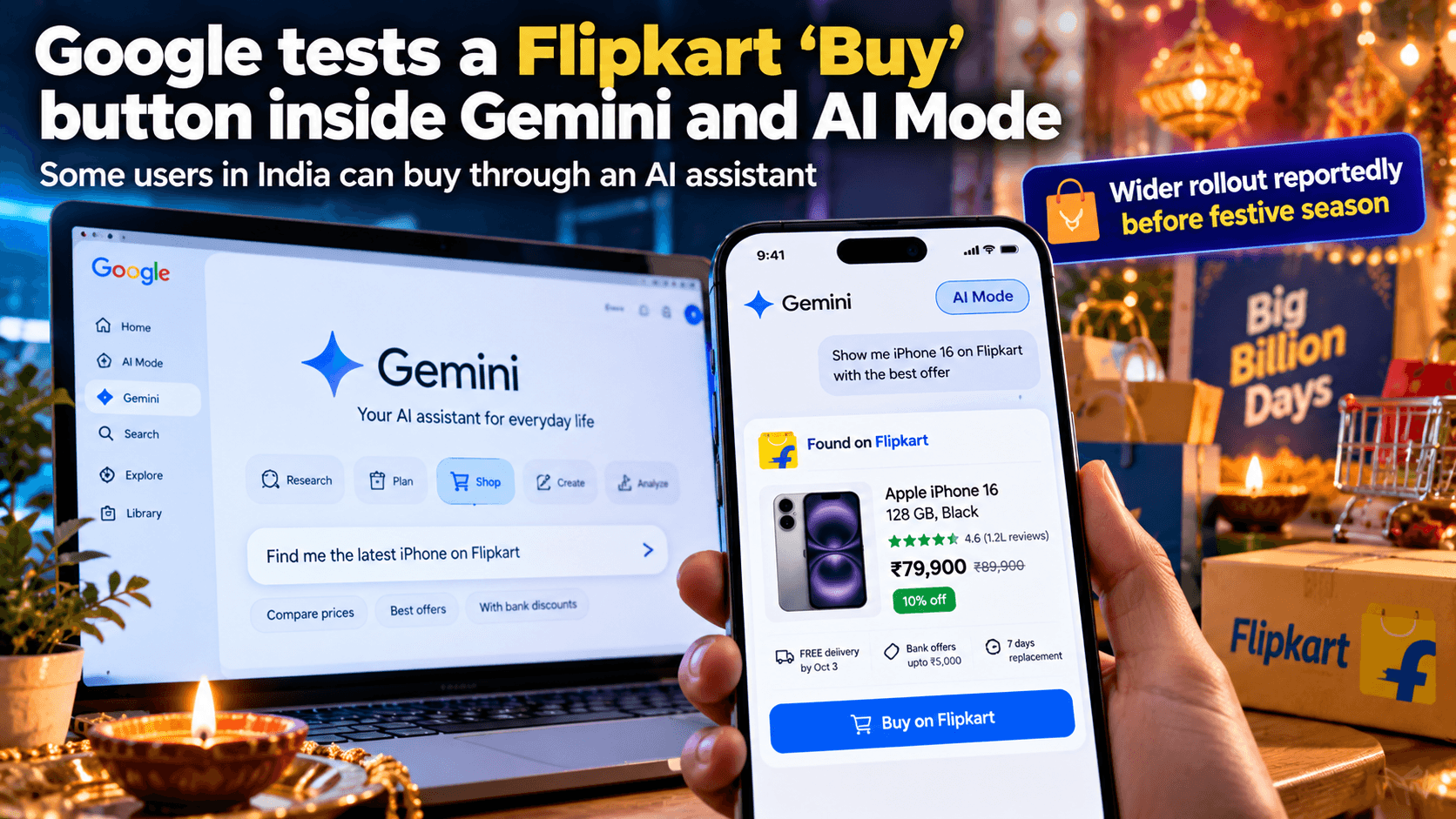
Google tests a Flipkart ‘Buy’ button inside Gemini and AI Mode
A limited test in India lets some users check out on Flipkart without leaving Google’s AI tools. Amazon listings appear too, but without the button.
3 min read
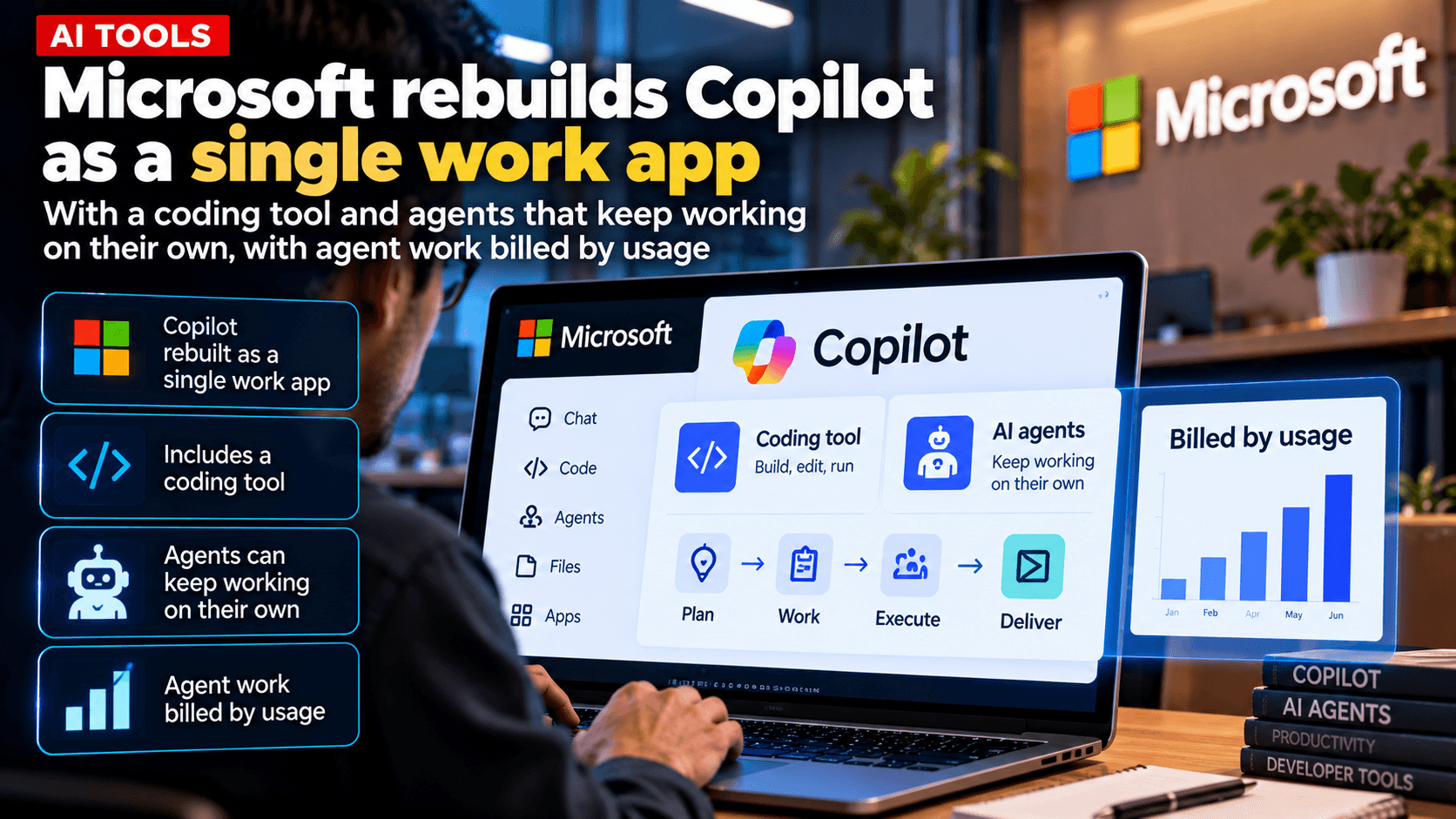
Microsoft rebuilds Copilot as one work app with coding and agents
The new Copilot combines chat, Word, Excel and PowerPoint, an app builder and always-on Autopilot agents. Bloomberg reports the separate consumer version is being folded in.
3 min read

Meta's Muse moves to glasses and Macs, and will take a cut of sales
At Connect, Mark Zuckerberg said Muse stays free "for a huge number of tokens" and that Meta expects to profit from a small fee on the transactions the agent completes. Walmart, Best Buy and Sephora signed up. Amazon still has not.
3 min read
Comments
No comments yet. Start the conversation.