Meta's Muse moves to glasses and Macs, and will take a cut of sales
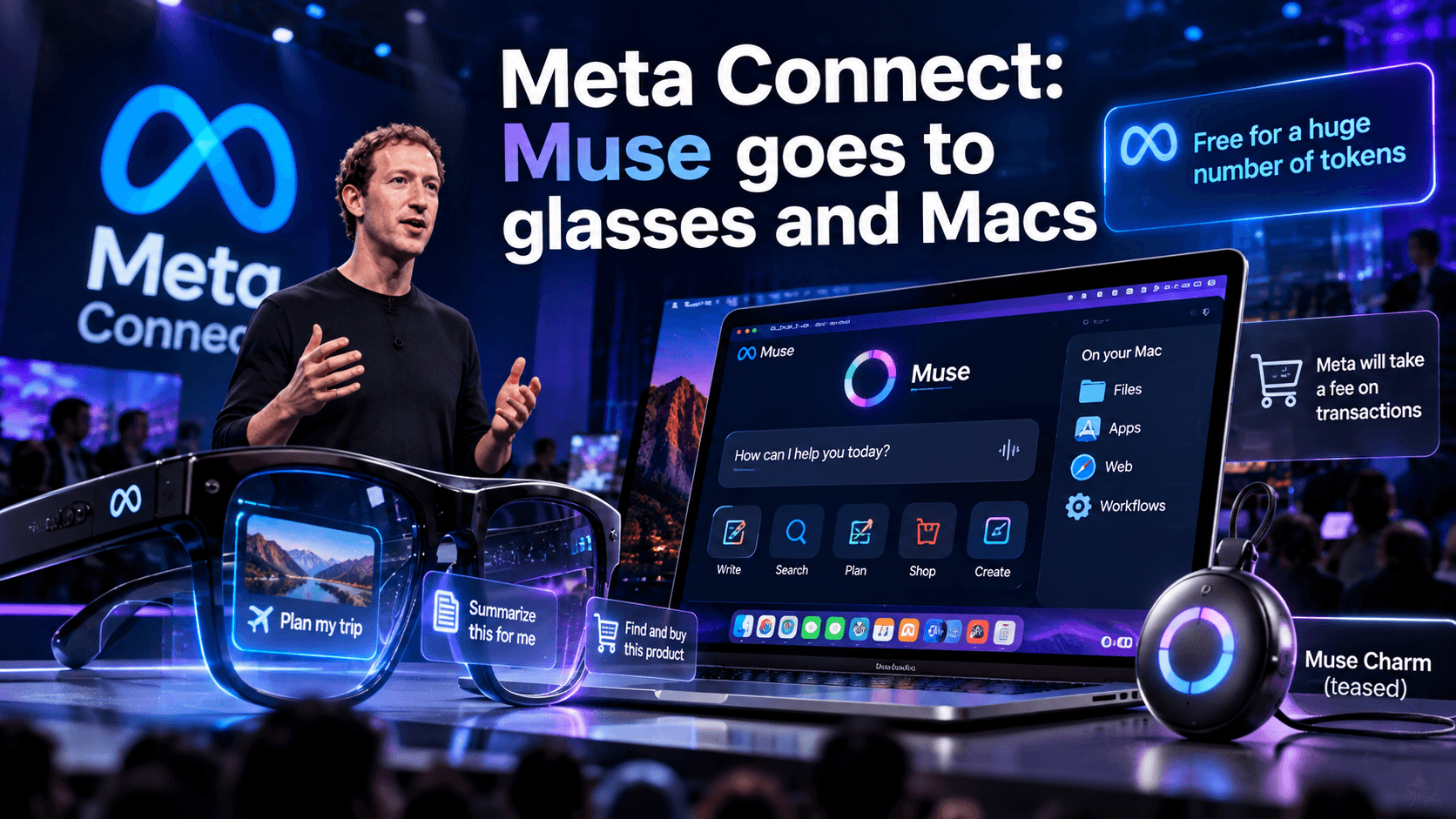
At Connect, Mark Zuckerberg said Muse stays free "for a huge number of tokens" and that Meta expects to profit from a small fee on the transactions the agent completes. Walmart, Best Buy and Sephora signed up. Amazon still has not.
Key takeaways
- Zuckerberg: Muse stays free for many tokens; Meta will profit from a small fee on transactions.
- Muse comes to Meta glasses, the Mac, email and a keychain device called Charm.
- Walmart, Best Buy, Sephora and Wayfair signed up as partners; Amazon blocked Muse on Sept 20.
Meta used its Connect conference on September 23 to say where Muse, the personal AI agent it launched on September 8, goes next: into Meta's smart glasses by wake word, onto a Mac where it can operate desktop applications while you walk away, into your inbox with an email address of its own, and into a keychain-sized device called Muse Charm.
The more consequential announcement was the business model. "We believe that Muse will make you money," Mark Zuckerberg said, adding that Meta is making "Muse free for a huge number of tokens with the expectation that over time we will profit by taking a small fee from transactions." The transactions will run through a list of retail partners: Walmart, Best Buy, Gap, Sephora, Wayfair and American Eagle, with Expedia and Instacart to follow; PayPal was added as a payment option, and Stripe and Shopify are among the commerce partners.
What was announced
Meta's own newsroom post says Muse is coming to its AI glasses to help you "stay on top of things, take tasks off your plate, and turn long-term goals into action plans, all hands free". TechCrunch adds the mechanics: a wake word, and tasks such as workout guidance, meal logging, booking appointments and buying products, arriving in the "coming months". The glasses themselves multiplied. Ray-Ban Meta Gen 3 is on sale from $449 with a 12-megapixel camera, 3K video and up to nine hours of battery; Ray-Ban Meta Audio, at $349 and 43 grams, has no camera at all and ships October 13; a $249 Meta Adventurer goes on sale October 23. Meta says it will offer more than 100 glasses options across Ray-Ban, Oakley and its own brand by the end of the year.
On the desktop, Muse can now drive applications on a Mac. Chief AI Officer Alexandr Wang's line: "You can walk away from your computer and it keeps working for you." A new model, Muse Realtime Avatar, gives the agent a face for live video calls, with custom voices. Developers get connectors for GitHub, Granola and Notion, and Meta says it received more than 1,500 connector applications in under a week.
Muse Charm is the odd one out: a keychain device with a small display, speakers, microphones and a fingerprint sensor into which, Zuckerberg said, Meta has "packed the whole Muse experience, including real-time voice". Price and date are promised later this year; Yahoo Finance reports it is due in time for the holidays. Yahoo Finance also cites Sensor Tower figures of 560,000 daily active users for Muse within 11 days of launch.
The fee is the news
Go back two weeks. The September 8 launch post said Muse was "free for most of what people need, with subscription plans for people who want to do more." Now the plan is tokens free, transactions taxed. That is the affiliate-link economy rebuilt as an agent toll. Whether the fee is charged to the merchant or the shopper, and how large it is, Meta has not disclosed.
Look at who joined and who did not. The one that is missing is Amazon, which on September 20 began showing Muse users the message "Continued access by an unauthorized AI agent violates Amazon's Conditions of Use" and said agents that buy on behalf of customers "should operate openly and respect service provider decisions about whether or not to participate." Amazon has a Ninth Circuit ruling from August 4 to think about, which held in the Perplexity case that users, not AI companies, control access to a computer, so this standoff is not settled. The likelier reading is that Meta is building the biggest possible catalogue outside Amazon so that the argument matters less.
Superintelligence in a keychain
Zuckerberg's framing was bigger than any product: "I expect that Muse is going to grow into the personal superintelligence that billions of people around the world are going to use to accomplish their goals and improve their lives." The glasses and the Charm are how that ambition gets a body. Meta already sells the eyewear; the agent is what makes a $349 pair of camera-less glasses more than headphones with a frame.
What to watch
The fee. If Meta discloses the rate, or a retailer does, you will know what an agent-mediated sale is worth. The Mac control rollout, and the first reports of what Muse does when a desktop app misbehaves. Charm's price. And whether Amazon and Meta reach terms, or whether Amazon's shoppers simply find that Muse buys elsewhere.
- AI agents
- Meta
- Muse
- agentic commerce
- smart glasses
- Meta Connect
Sources
- Introducing Ray-Ban Meta Audio and More AI Glasses Styles — Meta Newsroom, Sep 23, 2026
- Meta's Zuckerberg says Muse AI agent will take a small fee from transactions — Yahoo Finance, Sep 23, 2026
- Everything new coming to Meta's AI agent Muse — TechCrunch, Sep 23, 2026
- Meta gives Muse more capabilities, teases handheld AI device — Axios, Sep 23, 2026
- Everything announced at Meta Connect 2026 — Engadget, Sep 23, 2026
- Introducing Muse: The World's First Personal AI Agent Built for Everyone — Meta Newsroom, Sep 8, 2026
- Amazon blocks Meta's Muse AI assistant in new standoff over agentic shopping — GeekWire, Sep 20, 2026
Related stories
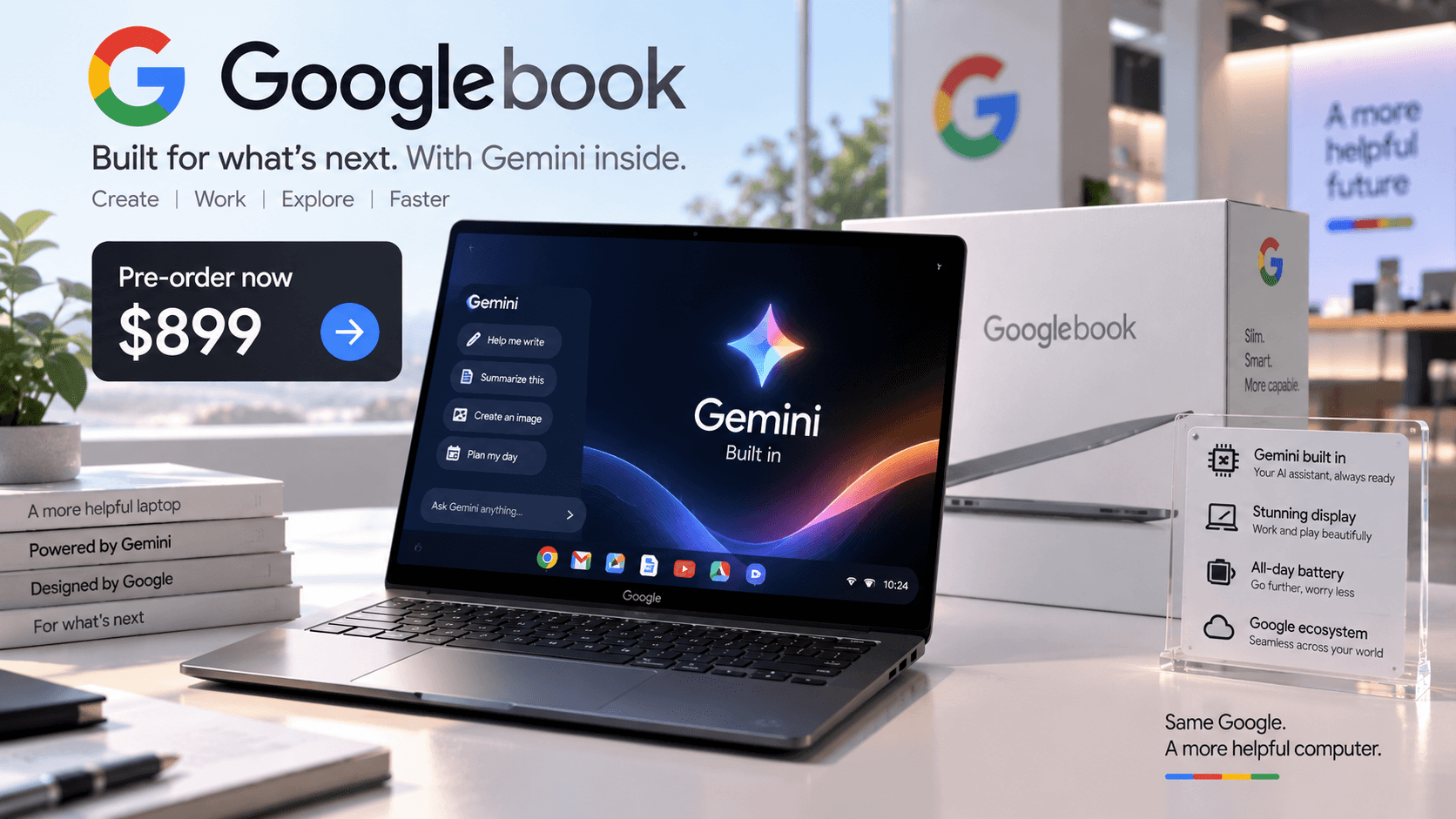
Googlebook laptops open for pre-order at $899 with Gemini built in
Five laptops from Acer, ASUS, Dell, HP and Lenovo reach US stores on October 4. The AI features Google is selling them on need an internet connection.
3 min read
Comments
No comments yet. Start the conversation.