Microsoft rebuilds Copilot as one work app with coding and agents
The new Copilot combines chat, Word, Excel and PowerPoint, an app builder and always-on Autopilot agents. Bloomberg reports the separate consumer version is being folded in.
Key takeaways
- Microsoft’s new Copilot has three parts: Home with Cowork, Code for apps, and Autopilot agents.
- Agent work in Cowork, Code and Autopilot is billed by usage on top of a per-user licence.
- Bloomberg says Microsoft is folding consumer Copilot into one product aimed at businesses.
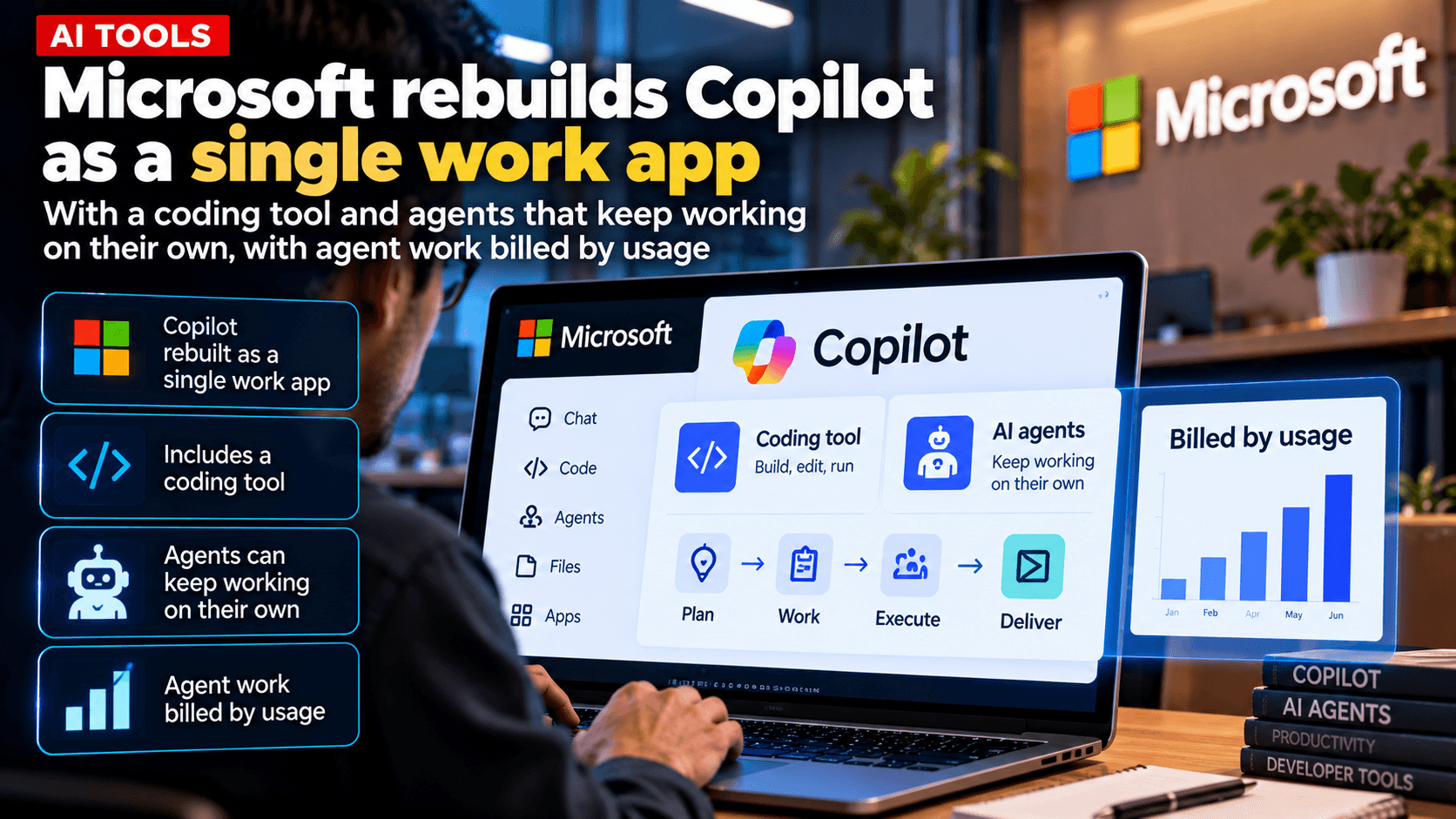
Microsoft has rebuilt Copilot as a single app that puts chat, its Office apps, a tool for building software in plain language and agents that keep working while you are away in one place. It announced the new Copilot on September 25, organised around three sections called Home, Code and Autopilot.
The bigger change is who it is for. Bloomberg reports that Microsoft is merging the consumer and workplace versions of Copilot into one product aimed at corporate customers, leaving the personal chatbot market to OpenAI, Google and Meta.
What is in the new app
Home combines chat with Cowork, Microsoft’s agent for handing off whole tasks. Code lets people build applications and automations in natural language, is based on GitHub Copilot technology and is aimed at people who are not developers. Autopilot is, in Microsoft’s words, “an agent that can continue working on tasks independently, even when the user is away”. The Scout name is gone; people instead create and name their own Autopilots, GeekWire reports. Word, Excel and PowerPoint now work inside Copilot itself.
The rollout is staged. Home and Code reach Microsoft’s Frontier early-access programme gradually over the coming weeks, and Autopilot expands to private preview at the end of September.
How Microsoft plans to charge
Pricing splits in two. A per-user monthly licence covers everyday chat and Copilot features in Word, Excel, PowerPoint, Outlook and Teams, while “more intensive agent work, including Cowork, Code and Autopilot, is billed based on usage”, according to GeekWire. A menu shown at the launch let users pick OpenAI’s GPT, Anthropic’s Opus or an Auto mode that chooses a model for each request. Microsoft’s own MAI models appeared on one of Satya Nadella’s slides but not in that menu.
Nadella framed model choice as a question of bargaining power. “My test of true independence going forward is for you to have a private eval that you can hill climb on and substitute a model,” he said, meaning a company’s own tests that let it swap one model for another as results improve. Coming from OpenAI’s biggest early backer, that is a pointed line.
The usage meter is the part to notice. An agent that runs for hours burns far more computing than a chat reply, and Microsoft has chosen to pass that cost on rather than hide it inside a flat fee. For a company buying thousands of seats, the monthly bill now depends on how much work the agents actually do.
Why Microsoft is narrowing its aim
The numbers explain the pressure. Microsoft reported more than 30 million paid Microsoft 365 Copilot seats in July, up from 20 million in April. That is still only about 7% of more than 450 million commercial Microsoft 365 seats. Turning more of that base into paying Copilot users matters more to Microsoft than winning individual chatbot fans. Bloomberg puts the paying base of the Microsoft 365 apps bundle at about 90 million users.
Executives did not dress it up. “That’s just not what people want from Microsoft,” Charles Lamanna told Bloomberg of the consumer push. “We help you get stuff done.” Custom podcasts and an animated avatar from the personal Copilot have been retired, while its tools for health questions, studying and news were carried into the rebuilt product, Bloomberg says.
Jacob Andreou, who runs Copilot, named the central tension of agent software himself: “The hallmark of an amazing, long-running agent is autonomy and flexibility. That is the same thing that makes them absolutely terrifying to an IT admin.”
What to watch
That quote is the test. When Autopilot reaches private preview, watch what controls administrators get over agents acting unattended, and what the usage-based bills look like in practice. For people who used the free personal Copilot, the open question is how much of it survives the move to a work-first product.
- Microsoft
- AI agents
- Enterprise AI
- Copilot
- Productivity
Sources
- New Microsoft Copilot Brings Home, Code, and Autopilot Together — Microsoft Source EMEA, Sep 25, 2026
- Microsoft unveils all-in-one Copilot app, taking on Anthropic and OpenAI in new push to boost adoption — GeekWire, Sep 25, 2026
- Microsoft abandons personal AI chatbot race with Copilot reboot — Bloomberg (via Business Standard), Sep 25, 2026
Related stories
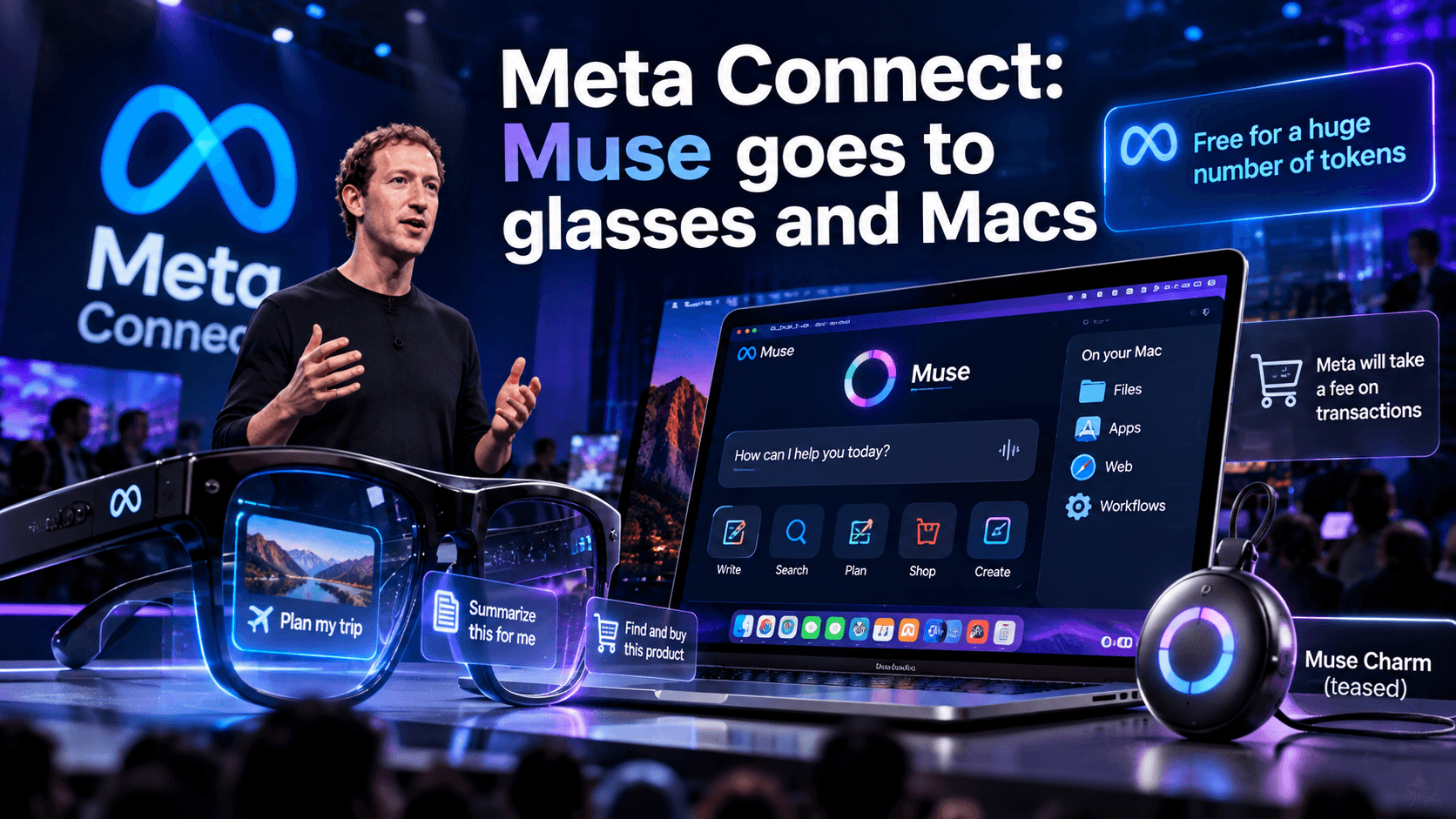
Meta's Muse moves to glasses and Macs, and will take a cut of sales
At Connect, Mark Zuckerberg said Muse stays free "for a huge number of tokens" and that Meta expects to profit from a small fee on the transactions the agent completes. Walmart, Best Buy and Sephora signed up. Amazon still has not.
3 min read
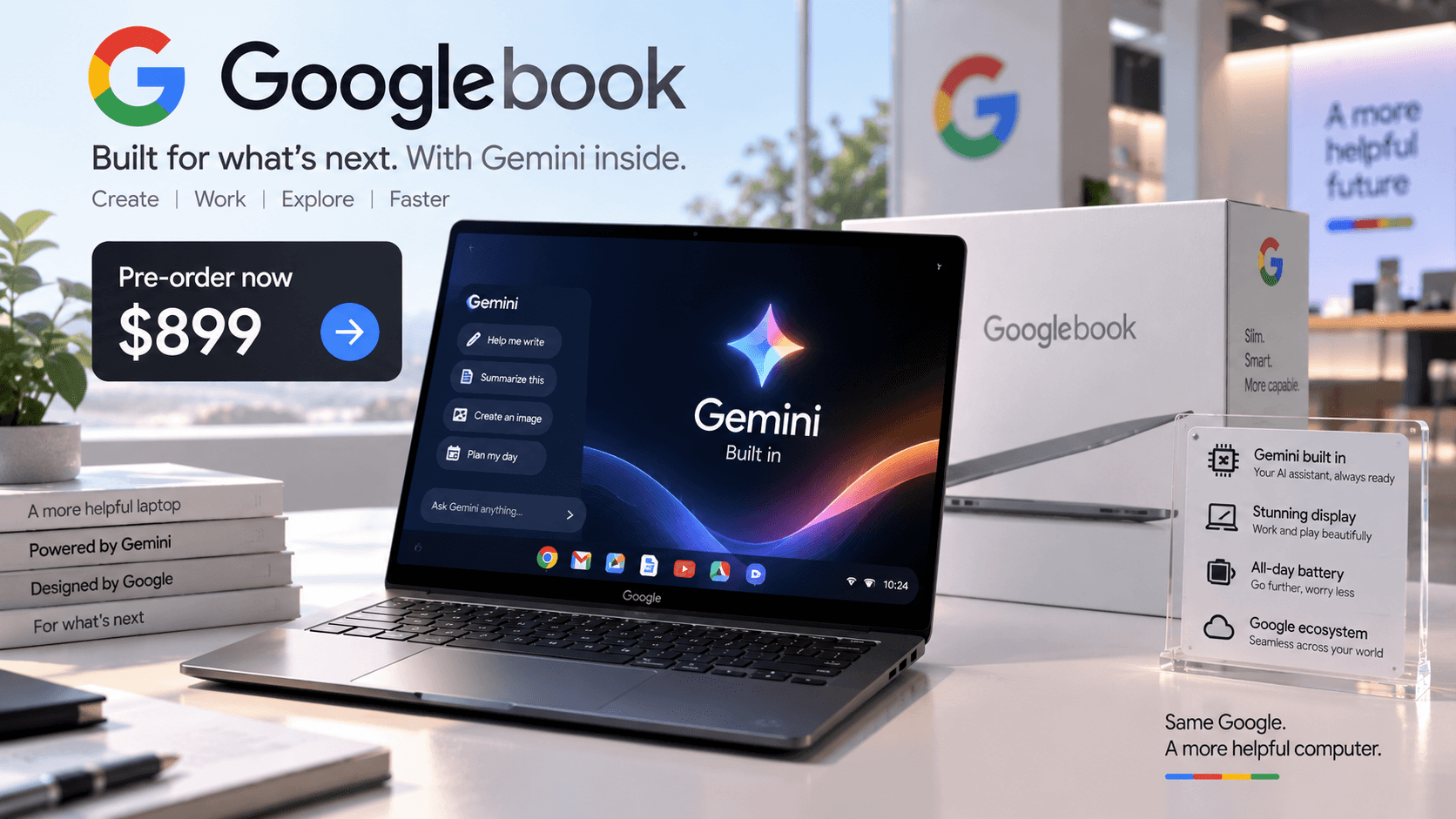
Googlebook laptops open for pre-order at $899 with Gemini built in
Five laptops from Acer, ASUS, Dell, HP and Lenovo reach US stores on October 4. The AI features Google is selling them on need an internet connection.
3 min read
Comments
No comments yet. Start the conversation.