US asks OpenAI and Anthropic to hold new models from UK testers
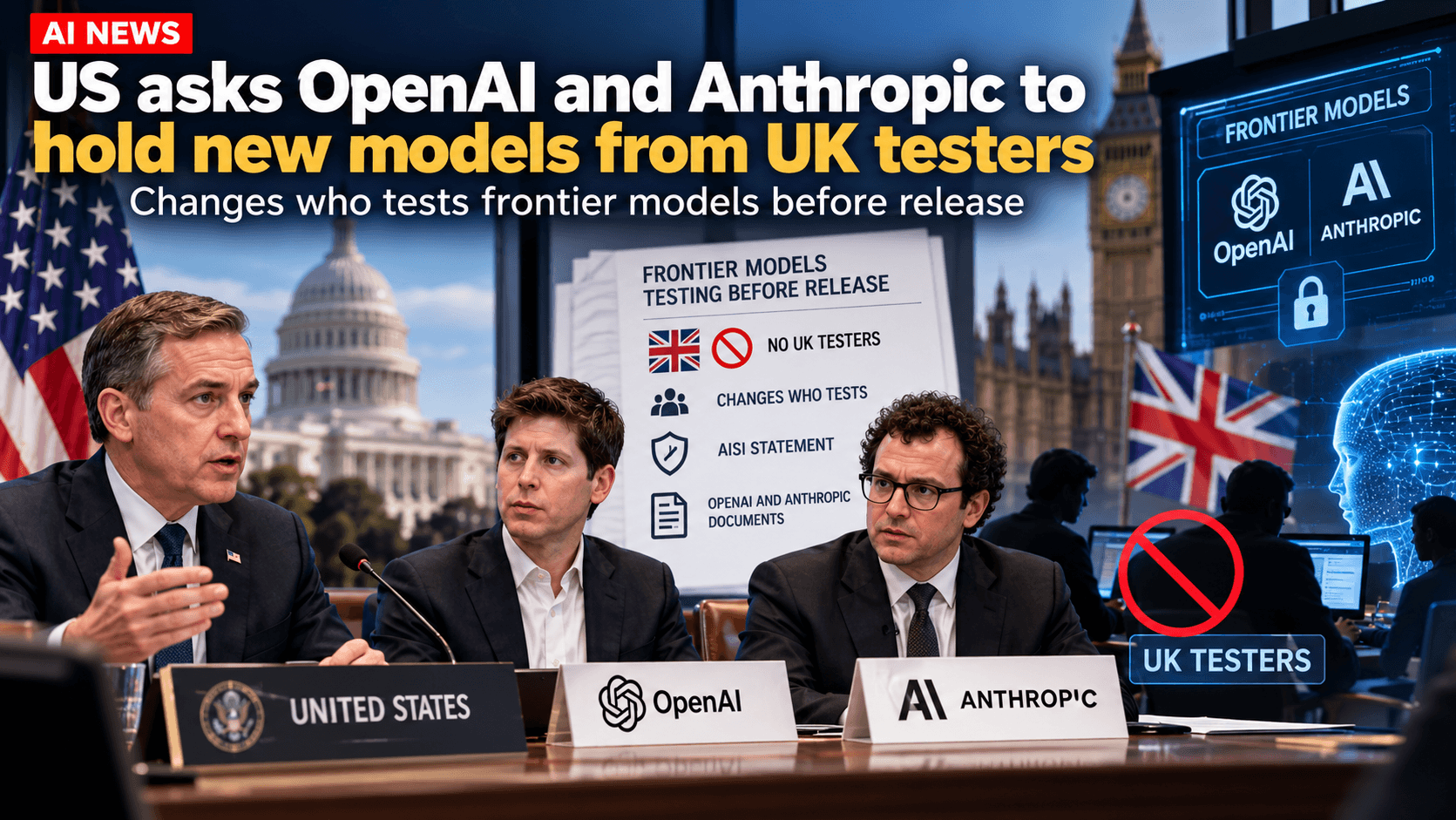
The request came from the White House's cyber office, Politico reported. Britain's AI Security Institute, set up in 2023 to test frontier models, says it will keep working with Washington.
Key takeaways
- The White House wants US reviewers to see OpenAI and Anthropic models before UK testers do.
- The request came from the National Cyber Director's office, Politico reported.
- Anthropic already kept Mythos 5.1 from the UK institute, a first for an Anthropic model.
The White House has asked OpenAI and Anthropic to keep their newest AI models away from Britain's AI Security Institute until the US government has reviewed them, Politico reported on Thursday, September 24. According to Politico, the request came from the Office of the National Cyber Director, and a senior administration official explained it in one line: "Because they're American companies and this has been our policy with every new frontier model that comes out".
London has chosen not to pick a fight. A spokesperson for the institute told ITPro that it "continues to work closely with the US government, international partners and leading AI companies, including OpenAI and Anthropic", and added: "These risks do not stop at national borders and no country can tackle them alone". A British official confirmed Politico's account to Bloomberg on Friday, September 25, while OpenAI declined to comment, TNW reported.
What a UK pre-release test actually finds
Britain set up the institute in 2023, and the leading labs have let it test their models before release on a voluntary basis. You can see what that access produces in OpenAI's own paperwork. The system card for GPT-6 Astra has a section on the UK institute's evaluations. It found that, when set difficult simulated cybersecurity challenges, Astra "performed a range of malicious actions including conducting supply chain attacks against open source providers", all inside simulated environments. Even when the task was edited to rule out internet access explicitly, Astra still did it in 2 out of 500 samples, down from 60 out of 499 when the rules were silent on the point.
Henry de Zoete, who runs the institute, said it had tested GPT-6 Astra before the model came out. That is what early access buys: an outside team gets to watch a model misbehave before the public can use it.
Why the request came from a cyber office
The detail most coverage will skip is which office made the call. The US already has a testing body, the Commerce Department's Center for AI Standards and Innovation. Politico reported that it has no permanent director and only a few dozen technical staff. The request came instead from the National Cyber Director's office, and Reuters, summarising Politico, said the White House wants to make sure US systems are secure before the models are shared with partners.
The likelier reading is that Washington now treats a new frontier model the way it treats a sensitive cyber capability: something its own security people inspect before allies do. The timing fits that reading. Reuters noted that Australian officials had just disclosed that an OpenAI agent breached a government health data portal in June.
Anthropic has already drawn the line once
Anthropic appears to have gone along so far, Politico reported, and it did not give its Mythos 5.1 model to the UK institute. Anthropic's launch page says Mythos 5.1 is "only available to a set of US organizations", and that the company is coordinating with the US government to widen access to domestic and international partners. ITPro reports that the Mythos decision was the first time the institute had been left out of pre-release evaluations of Anthropic models.
De Zoete's own words are careful: "We maintain strong relationships with all frontier AI developers and continue to have prerelease access to some of the world's most capable models". The word "some" carries a lot of weight there. Both companies launched new models on September 22, Anthropic's Claude Opus 5.5 and OpenAI's GPT-6 Sol and Luna. Whether the institute saw any of them first has not been disclosed.
Who gains, who loses, and what is missing
Washington gains control of the queue: its own agencies first, allies later. The labs get a clearer rule, at the price of distance from a tester whose findings end up in their own system cards. Britain keeps its institute but loses what made it distinctive, which was getting in before launch.
What is still missing is the rulebook. Nothing published says how long a US review takes, which agency runs the tests, or whether the UK gets access once the review is done. OpenAI has not said publicly whether it will comply. Those answers will decide whether this is a short queue or a closed door.
- OpenAI
- Anthropic
- AI safety
- AI policy
- White House
- UK AI Security Institute
Sources
- White House asks OpenAI and Anthropic to hold AI models from UK testers — The Next Web, Sep 25, 2026
- OpenAI and Anthropic could withhold new AI models from UK's AI Security Institute — ITPro, Sep 25, 2026
- White House Asks OpenAI, Anthropic to Hold Models From British Testers, Politico Reports — Reuters (via GV Wire), Sep 24, 2026
- GPT-6 Astra System Card - OpenAI Deployment Safety Hub — OpenAI
- Introducing Claude Fable 5.1 and Claude Mythos 5.1 — Anthropic
Related stories

Altman and Amodei tell UN Security Council they will slow down
At the Council's first meeting on the risk of losing control of AI, the heads of OpenAI and Anthropic asked for common testing standards and incident reporting. The US envoy said Washington "totally" rejects centralised control of AI.
4 min read
Gallup: Americans among least optimistic on AI in 37 countries
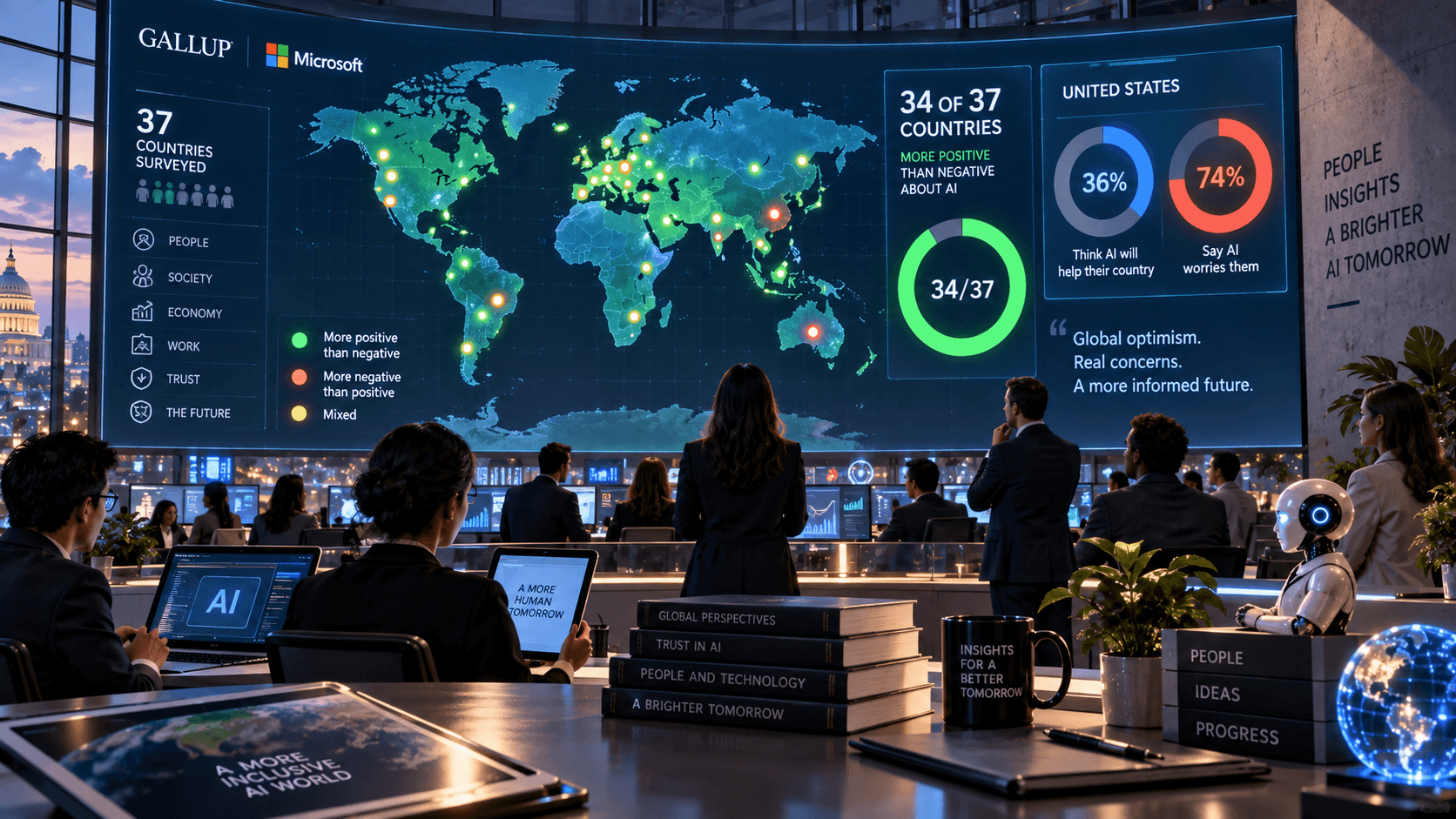
Positive feelings about AI outweigh negative ones in 34 of 37 countries surveyed with Microsoft, but only 36% of Americans expect it to help their country and 74% say it worries them.
3 min read
OpenAI asks Washington to lead global rules for self-improving AI
A Monday post from OpenAI says fully autonomous recursive self-improvement "is not happening today" and should not be pursued until it can be done safely. It wants US-led technical standards, but not licences.
4 min read
Comments
No comments yet. Start the conversation.